Erfurt Germany Things to Do: A Weekend Trip Guide
Erfurt Germany things to do: the Krämerbrücke, cathedral hill, UNESCO Old Synagogue, Petersberg and how to reach it by train from Berlin.
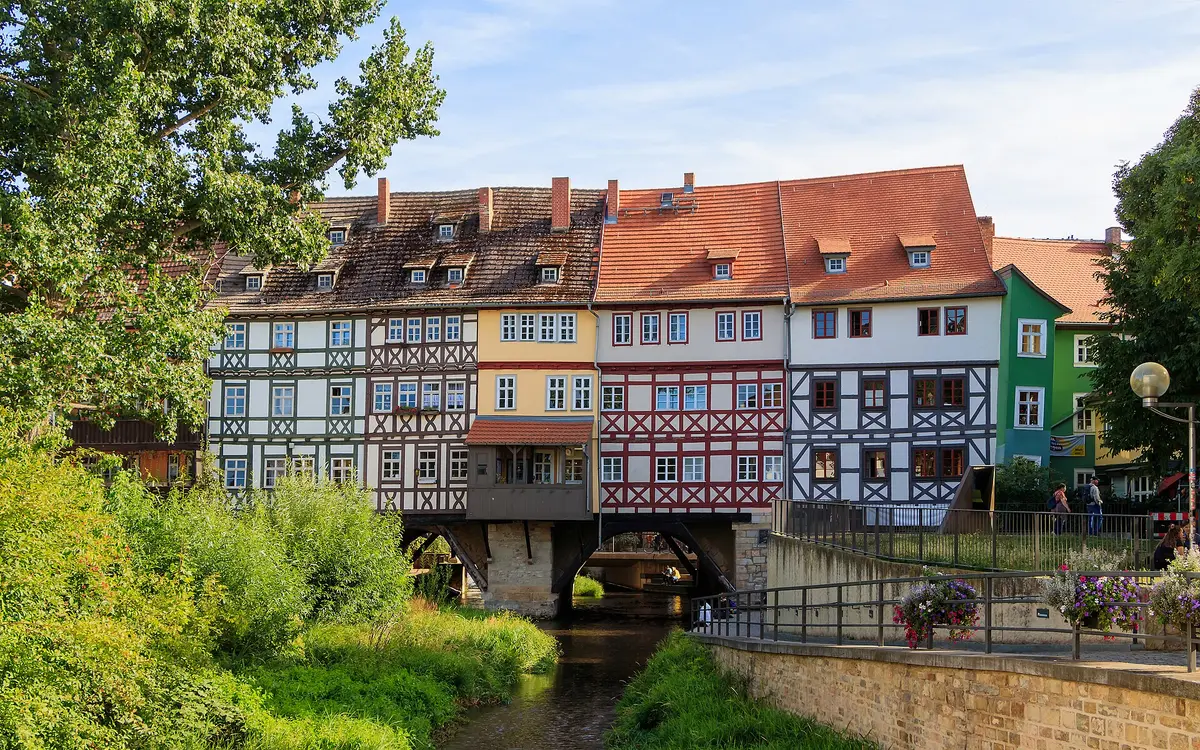
Erfurt is the capital of Thuringia, a medieval city with an intact old town, an inhabited stone bridge lined with shops, a hilltop cathedral and a UNESCO-listed medieval Jewish quarter. It is easy to see in one or two days and can be reached by direct ICE from Berlin in under two hours, so it works well as a weekend trip.
Most expats in Germany head to Munich or Hamburg and skip the middle of the country. Erfurt is a good correction. It is compact, walkable and quieter than the headline cities. This guide covers what to see, how to get there, what it costs and how to fit it into a day. Details such as prices and opening hours change, so use the official links to confirm before you travel.
Quick facts
- Getting there: direct ICE from Berlin Hbf to Erfurt Hbf in under two hours. Check the journey time and advance fares for your date on bahn.de.
- Best time: late spring to early autumn for walking and terraces. December if you want a Christmas market.
- Time needed: one full day covers the highlights. Two days let you add Weimar or the Petersberg tunnels.
- Cost: the old town itself is free to walk. Museums and the Old Synagogue charge entry, and a 48-hour ErfurtCard bundles several of them.
- Closure notice: the Old Synagogue is closed for restoration from 3 August 2026 until an expected reopening on 28 February 2027. The Mikveh and the Small Synagogue stay open with free entry in the meantime.
- Ticket tip: the ErfurtCard covers the municipal museums and the Old Synagogue, and public transport only with the ErfurtTravelCard version.
- UNESCO status: the Jewish-Medieval Heritage of Erfurt was added to the World Heritage List in September 2023.
What are the best things to do in Erfurt?
The main sights sit within a 15-minute walk of each other. In rough order of how most visitors take them: the Krämerbrücke, the cathedral hill, the Old Synagogue and Mikveh, the Petersberg Citadel, and then wandering the old town streets and squares. Erfurt's own tourist board lists the cathedral, the Severikirche, the bridge, the Old Synagogue, the medieval Mikveh and the citadel as its headline places (erfurt-tourismus.de).
What is the Krämerbrücke?
The Krämerbrücke (Merchants' Bridge) crosses the river Gera in the old town and is built up with houses along both sides. The tourist board describes it as the longest series of inhabited buildings on any bridge in Europe. It is usually given as about 120 metres long.
Today 32 buildings stand on it, home mostly to small galleries, craft shops and cafes, with people living in the upper floors. The present buildings date from after a town fire in 1472, and the city celebrated 700 years of the bridge in 2025. Walk across it, then look at it from the river banks on either side, where the stacked timber frontage is easiest to read.
Go early or on a weekday if you want it quiet. By midday in summer it fills with groups.
What is on the cathedral hill (Domberg)?
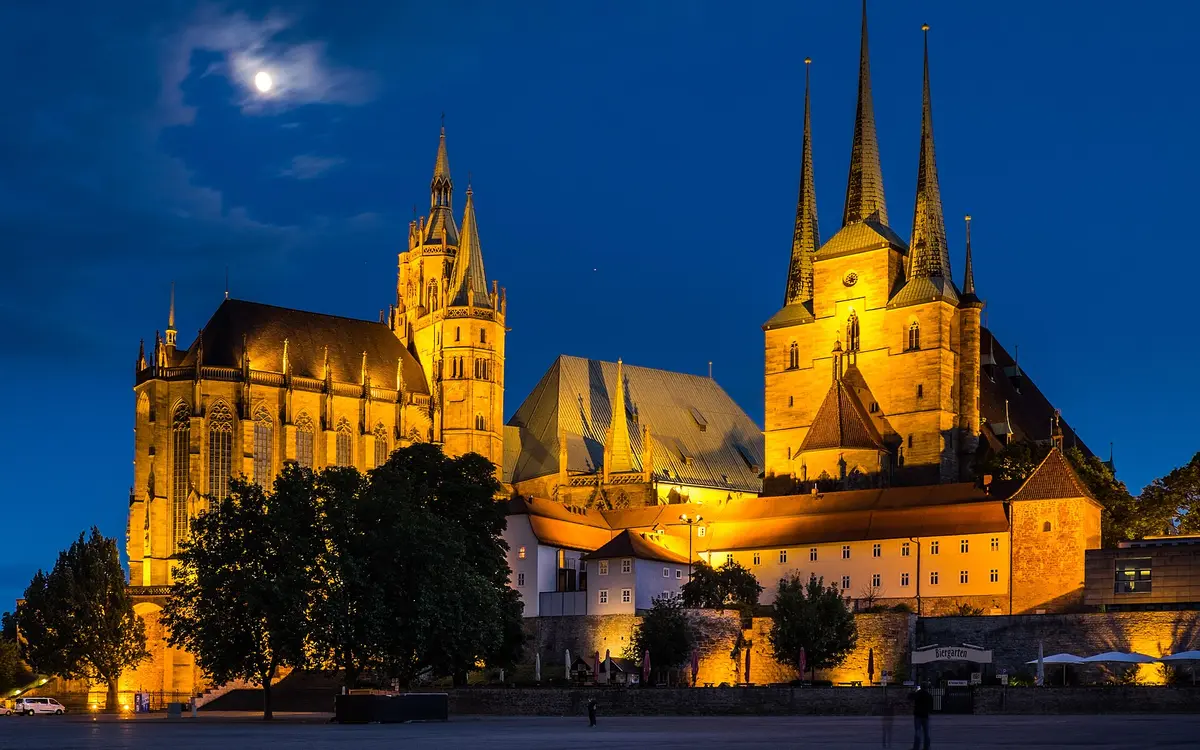
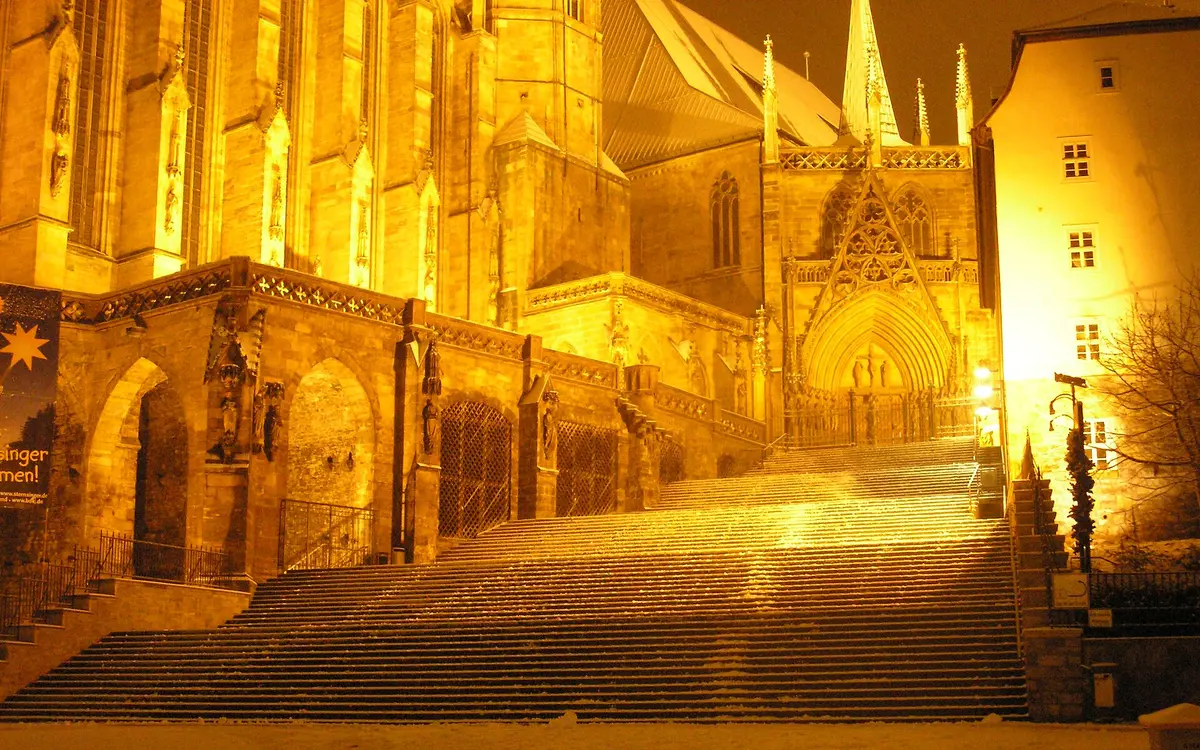
The Domplatz is a large open square in the middle of the old town, used for markets and events. On one side, a broad flight of steps, usually counted at 70, leads up to the Domberg, where two churches stand next to each other: the Dom St. Marien (cathedral) and the Severikirche.
The tourist board describes the cathedral as late Gothic, with a high Gothic choir and a Romanesque tower, on a site where a church has stood since the eighth century. It holds the Gloriosa, widely described as the largest freely swinging medieval bell in the world, and it is a good reason to ask about a guided visit. Opening hours and tower access vary, so check the cathedral's own site or the tourist office before planning your day around either church.
The steps are the classic photo spot. Come back at the end of the day, when the light on the facades is softer and the hill is emptier.
Is the Old Synagogue in Erfurt worth visiting?
Yes, and it is the sight that most separates Erfurt from other German old towns. The Old Synagogue, the Mikveh (a medieval ritual bath) and the Stone House together form the Jewish-Medieval Heritage of Erfurt, inscribed by UNESCO on 17 September 2023 (UNESCO). UNESCO describes them as an early and rare testimony to Jewish religious and secular architecture in medieval Central Europe.
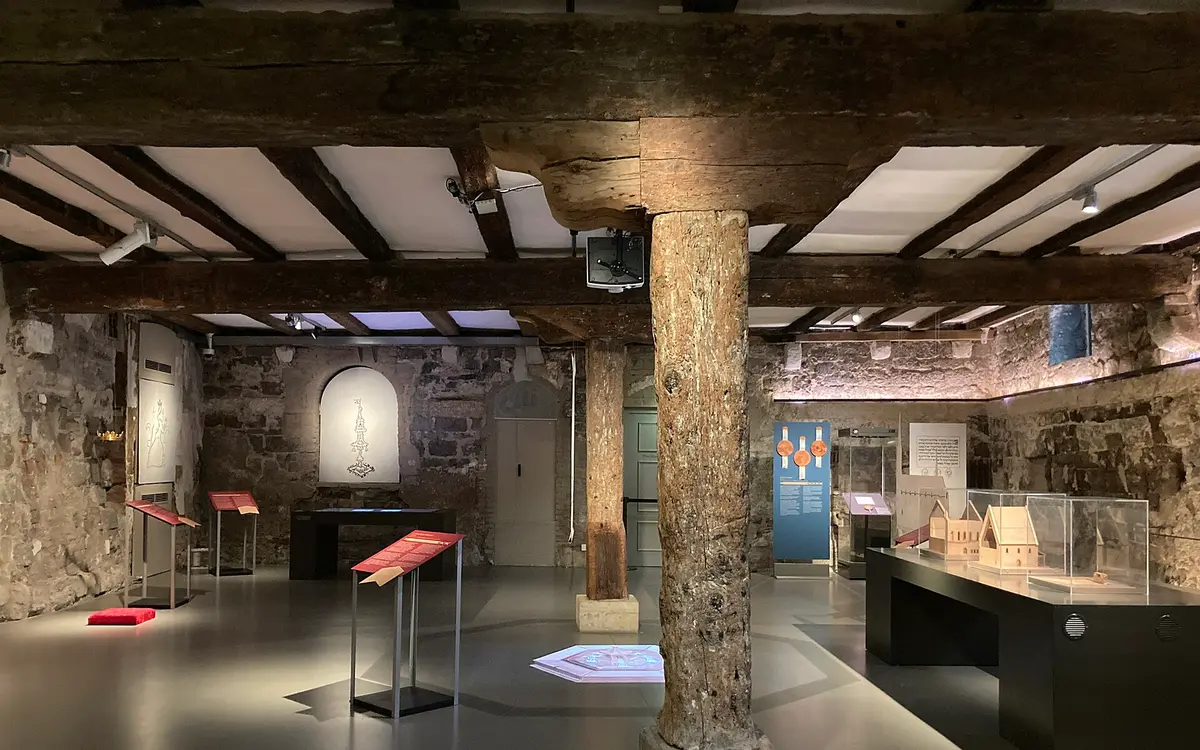
The Old Synagogue is one of the oldest preserved synagogues in Europe, with construction beginning around 1100. The Mikveh dates to the 12th century and was only rediscovered in 2007. It is reached with a guided visit rather than on your own (it can also be seen through a window in the roof of its shelter), so check the tourist board's UNESCO page for current tour times.
The tourist board lists entry to the Old Synagogue and the Erfurt Treasure at 8 euros (5 euros reduced, audio guide included), open Tuesday to Sunday from 10:00 to 18:00, and free with the ErfurtCard. Important for 2026 and early 2027: the building is closed for restoration from 3 August 2026, with reopening expected on 28 February 2027. During the closure the Mikveh, the Small Synagogue and the house Zum Güldenen Krönbacken offer free entry, and there is an open-air exhibition and public tours of the Jewish quarter. Confirm the reopening date and prices with the operator before you go.
What is the Petersberg Citadel?
The Petersberg Citadel is a baroque fortress on a hill right beside the Domplatz. It is one of the largest and best-preserved baroque fortresses in Europe, begun in 1665 on the site of a former Benedictine monastery. A panorama path runs up from the Domplatz.
The outer grounds can be walked without a ticket, and views over the city are the reward. The more unusual experience is the network of tunnels beneath it, visited on guided tours run by the tourist office, usually in German. Tour prices and schedules change, so ask at the Tourist Information at Benediktsplatz 1 or on the Erfurt tourism website. The ErfurtCard gives a discount on citadel tours.
Where should you walk in the old town and around the Anger?
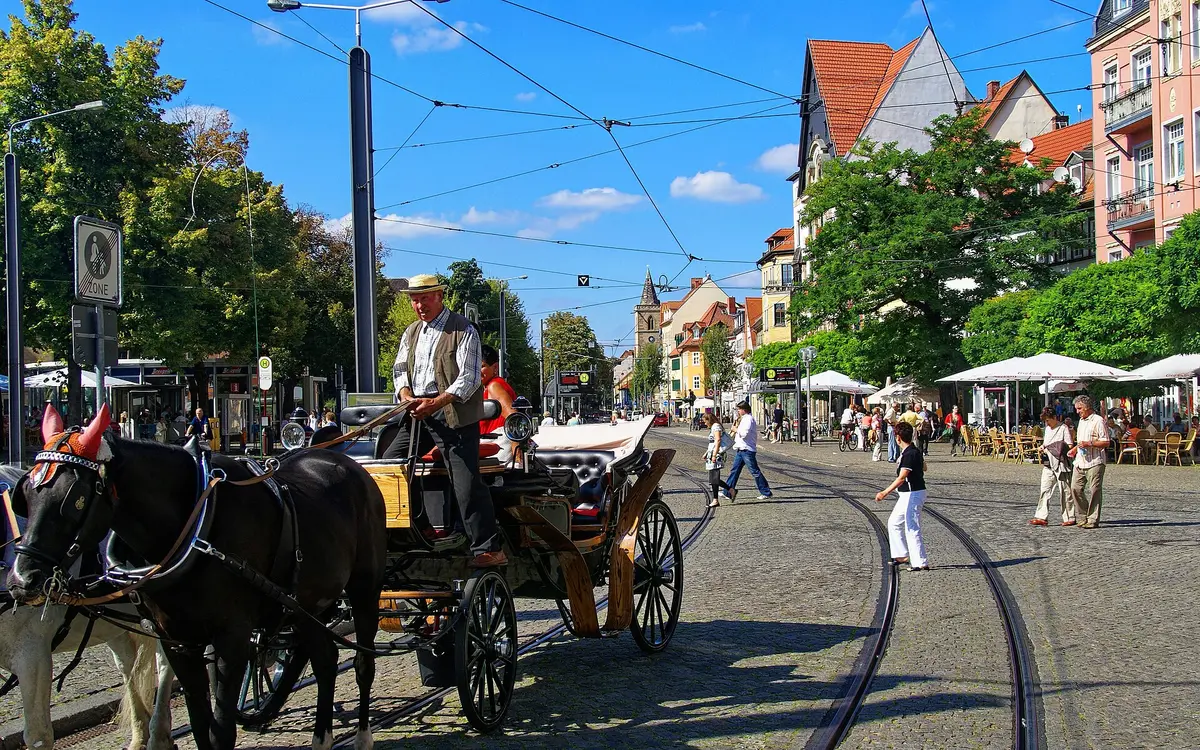
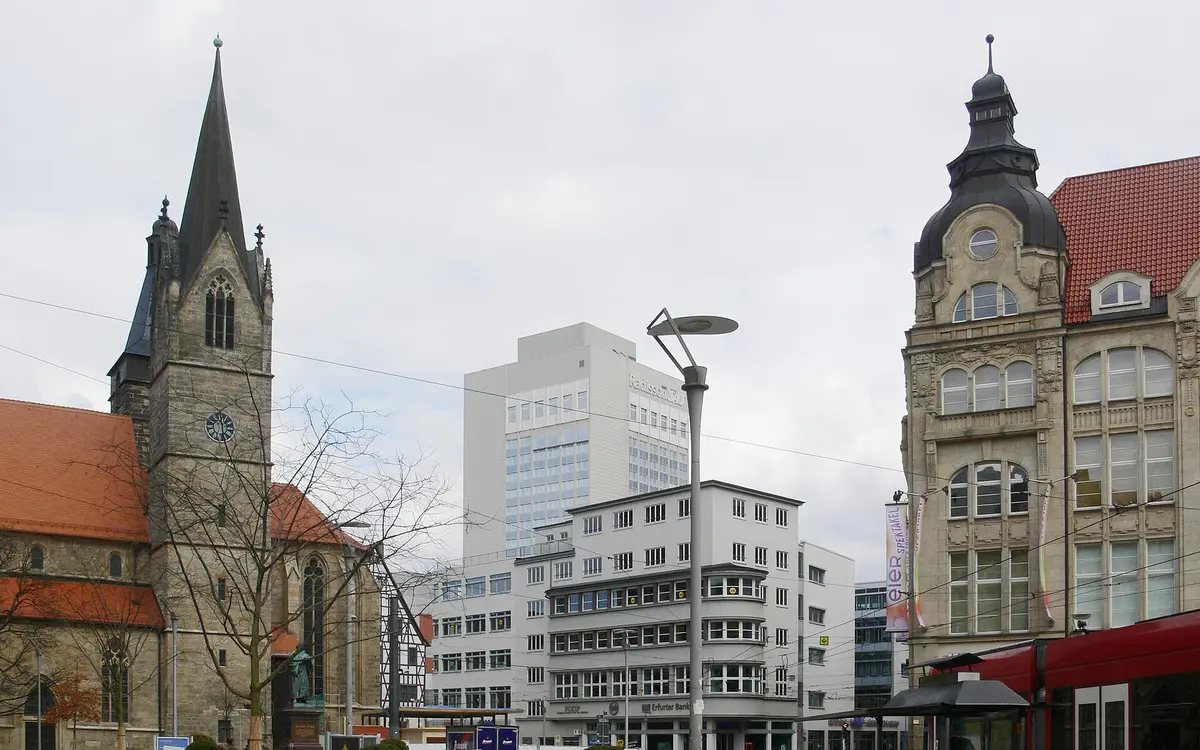
Beyond the headline sights, Erfurt rewards aimless walking. The streets around the Krämerbrücke, the Fischmarkt and the Domplatz are all pedestrian-friendly, with a mix of restored merchant houses and small independent shops. The Anger, a broad square and shopping street in the old town, is where locals run errands. It is the practical counterpart to the postcard core, and a good place for a coffee break and for catching a tram if your feet are tired.
What should you eat in Erfurt?
Thuringia's best-known export is the Thüringer Rostbratwurst, a grilled pork sausage with protected geographical indication status in the EU. It must be made in Thuringia, and the specification describes a medium-fine sausage of at least 15 centimetres in a natural casing (EU Regulation 657/2012). You will find it at stalls and in restaurants throughout the city, usually in a roll with mustard.

For a sit-down meal, look for Thuringian dumplings (Klöße) as a side with roast meat and gravy, a staple of regional cooking. Ask the waiter what the kitchen does best rather than relying on a list from a blog.
How do you get to Erfurt from Berlin, Leipzig and Frankfurt?
From Berlin: Deutsche Bahn runs direct ICE services from Berlin Hbf to Erfurt Hbf in under two hours, so check bahn.de for the exact time on your date. That makes Erfurt realistic as a day trip, though an overnight stay is more relaxed. For other options, see our guide to day trips from Berlin and our rundown of weekend trips in Germany by train.
From Leipzig and Frankfurt: both cities have long-distance services to Erfurt. Construction work in Thuringia lengthens some journeys, and the timetable change on 13 December 2026 brings further construction-related changes, so check bahn.de or the DB Navigator app for your exact date.
How much does a weekend in Erfurt cost?
Rail is the biggest variable. Advance saver fares on bahn.de cost less than flexible fares, so book ahead if your dates are fixed. In town, walking the old town costs nothing, and most spending goes on entry fees, meals and a bed.
The 48-hour ErfurtCard is the main money-saver for museum fans. It includes the municipal museums and exhibitions, the Old Synagogue and the Erfurt Treasure, a public old-town tour in German, and discounts on several other attractions (ErfurtCard page). It costs around 14 euros, so confirm the current price in the tourism shop when you buy. It pays off if you plan two or three paid entries, otherwise skip it. To see how leisure spending fits into a monthly budget, our cost of living guide is a useful reference.
When is the best time to visit Erfurt?
Late spring and early autumn give you comfortable walking weather and open-air seating. Summer is busier on the bridge and the Domplatz. Winter is quieter and cold, but suits a short trip around the Christmas season. If markets are the draw, our Christmas markets guide compares options across Germany.
Why is Erfurt a good staycation for people living in Germany?
If you already live here, the appeal is practical. You skip flights and airport time, you can leave after work on a Friday, and you can be back on Sunday evening without a long journey. From Berlin the ICE ride is short enough that you arrive with most of a day left, and the old town is small enough that you do not need a car or a packed itinerary. If you moved here for work, our guide to switching from public to private health insurance explains when that option opens up for you.
It also suits a slower kind of trip. There is no single sight you have to queue for. You can cross the bridge, sit in a cafe, walk up to the cathedral and still feel you have done the city properly. That helps when you have limited holiday days and want a weekend that does not feel like a checklist.
What else is worth seeing if you have more time?
The tourist board's list of places also includes the Erfurt Protestant Augustinian Monastery, the egapark horticultural park and the Thuringian Zoopark, which suit a second day or a trip with children. The municipal museums and exhibitions are included in the ErfurtCard, so they make sense if the weather turns.
Can you combine Erfurt with Weimar?
Yes. Weimar is a short regional train ride from Erfurt, usually around 15 minutes, so it is a natural second stop. It is best known for its classical and Bauhaus history, and our Bauhaus trail guide covers it in detail. For a wine-focused side trip in the same region, see our guide to the Saale-Unstrut wine region. Heading south, Bamberg pairs well as another historic old town.
What practical tips help with a short trip?
- Book the train early. Advance saver fares are the cheapest option. Flexible tickets cost more.
- Wear proper shoes. The old town has cobbled streets, and the climb to the Domberg is on steps.
- Check opening days. The Old Synagogue is closed until about 28 February 2027, and normally closes on Mondays.
- Ask about the Mikveh early. Access is by guided visit, so find out the next slot when you arrive.
- Use the Tourist Information. It is at Benediktsplatz 1 and sells the ErfurtCard. The tourist board lists a hotline on +49 361 66400.
Plan your visit: a one-day route
This is a sample day for someone arriving on a morning train from Berlin. Adjust the times to the timetable and check each sight's opening hours first.
- 09:15: arrive at Erfurt Hbf and walk or take the tram to the old town.
- 09:45: coffee, then cross the Krämerbrücke while it is quiet.
- 10:45: the Jewish quarter and a Mikveh tour if a slot fits, plus the Old Synagogue once it has reopened.
- 12:30: lunch with a Thüringer Rostbratwurst or a regional meal.
- 14:00: the steps up to the Domberg, then the cathedral and Severikirche.
- 15:30: up to the Petersberg Citadel for the views, or a tunnel tour if you have booked one.
- 17:00: stroll through the Anger and the old town, then dinner before the evening train back.
FAQ
Is Erfurt worth visiting?
Yes. It has a well-preserved medieval old town, an inhabited bridge, a cathedral hill and a UNESCO-listed Jewish medieval heritage site, all within walking distance. It is a good choice if you prefer a calmer trip to a big-city break.
How long does it take to get from Berlin to Erfurt?
Deutsche Bahn runs direct ICE services from Berlin Hbf to Erfurt Hbf in under two hours. Check bahn.de for your date, since timetables and engineering works change.
How many days do you need in Erfurt?
One full day covers the main sights. Stay two days if you want to join a tunnel tour on Petersberg, spend longer in the museums or add Weimar by regional train.
Is Erfurt a UNESCO World Heritage Site?
Partly. UNESCO inscribed the Jewish-Medieval Heritage of Erfurt, covering the Old Synagogue, the Mikveh and the Stone House, in September 2023. The wider old town is not itself a World Heritage Site.
What is the Krämerbrücke?
It is a medieval bridge over the Gera that is lined with houses on both sides. Around 32 buildings stand on it, with galleries and small shops on the ground floors and homes above. The tourist board describes it as the longest series of inhabited buildings on a bridge in Europe.