Moving to Munich
Moving to Munich as an expat: neighborhoods, cost of living, Anmeldung, health insurance and jobs, plus what makes Munich different from other cities.
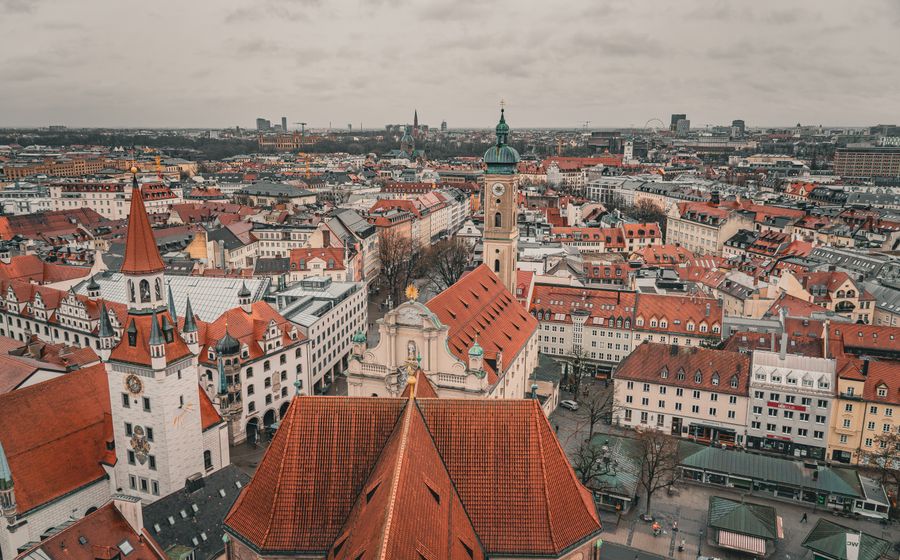
Moving to Munich means moving to Germany's most prosperous city, and one of its most expensive. Munich (München) is the capital of Bavaria, home to approximately 1.6 million people, and consistently ranked among the highest-quality-of-life cities in the world. It is Germany's hub for automotive engineering, finance, insurance, and aerospace, and has a growing tech startup scene.
This guide covers what's specific to Munich, the neighborhoods, the notoriously tight rental market, the Bavarian bureaucracy quirks, and what the general "moving to Germany" guides don't prepare you for.
Why expats choose Munich
- Highest average salaries of any German city
- Extremely low unemployment, job market is strong
- World-class standard of living (parks, culture, safety)
- Gateway to the Alps, skiing and hiking within 1 hour
- Strong expat community in tech, finance, and engineering
- Excellent public transport (one of Germany's best)
- Short flight connections across Europe
- Most expensive city in Germany, rents are dramatically higher than Berlin
- Rental market is extremely tight, vacancy rates under 0.2%
- Bavarian culture is more conservative and formal than Berlin
- German language matters more here, English is less universal
- Expensive restaurants and nightlife compared to other German cities
- Oktoberfest crowds make September/October rental searching chaotic
Best neighborhoods for expats in Munich
Munich is divided into Stadtbezirke (city districts). The city is more compact than Berlin and most areas are well-connected by U-Bahn and S-Bahn. Here are the most relevant areas for expats:
| Neighborhood | Character | 1-bed rent (approx) | Best for |
|---|---|---|---|
| Maxvorstadt / Schwabing | University district, museums, upscale cafés. One of Munich's most desirable central areas. | €1,800–2,600 | Academics, professionals, young expats |
| Glockenbachviertel / Au | Vibrant, artistic, LGBTQ+ friendly. Munich's closest equivalent to Berlin's Mitte/Prenzlauer Berg mix. | €1,700–2,400 | Creative expats, young professionals |
| Lehel / Bogenhausen | Upscale, quiet, close to the English Garden. Many international families and corporate expats. | €2,000–3,200 | Families, senior professionals, corporate expats |
| Haidhausen | East Munich, increasingly popular, slightly more affordable, good transport links. | €1,500–2,100 | Budget-conscious expats who want central access |
| Neuhausen / Nymphenburg | Family-friendly, west of centre. Near Nymphenburg Palace. Quieter, greener. | €1,700–2,300 | Families, professionals wanting quieter life |
| Schwabing-West / Milbertshofen | More affordable north Munich. Good S-Bahn connections. Quieter expat scene. | €1,300–1,800 | Budget-conscious expats, less central |
Tip: Munich has almost no "cheap" central neighborhoods. If budget is a primary concern, consider Haidhausen or Schwabing-West. Alternatively, surrounding towns like Dachau, Freising, or Erding offer significantly lower rents and good S-Bahn connections into the city (25–40 minutes).
Cost of living in Munich (2026)
| Expense | Monthly cost |
|---|---|
| 1-bedroom apartment (central) | €1,700–2,600 |
| 1-bedroom apartment (outer districts) | €1,200–1,700 |
| Groceries (one person) | €280–420 |
| MVV monthly travel card (inner ring) | €57 (Deutschlandticket) |
| Gym membership | €30–80 |
| Health insurance (GKV, employee) | €300–650 (salary-based) |
| Health insurance (private, under 35) | €220–360 |
| Eating out (mid-range restaurant, per meal) | €18–30 |
| Beer at a Biergarten | €5–7 (Maß, 1L) |
Munich is roughly 30–40% more expensive than Berlin for accommodation, and 15–20% more for general living costs. However, salaries in Munich, particularly in engineering, finance, and tech, are also meaningfully higher, which offsets the difference for skilled workers.
A single professional earning €75,000 gross in Munich typically takes home €3,600–4,000/month net. A comfortable life (central 1-bed, groceries, transport, going out) costs around €2,800–3,500/month, leaving moderate savings room.
Anmeldung in Munich
Munich's Anmeldung (address registration) process is more organized than Berlin's, but appointments still fill up quickly in central districts. Key differences:
- Online booking at muenchen.de/buergerbuero. Slots are available roughly 3–4 weeks in advance. Book as soon as you have a confirmed address.
- Munich KVR (Kreisverwaltungsreferat) handles both Anmeldung and residence permit applications in one office, more efficient than Berlin's split system.
- Walk-in slots are more available than in Berlin. Several Bürgerbüro locations in Munich offer limited same-day slots, especially at less central offices (e.g., in Ramersdorf or Moosach).
- Wohnungsgeberbestätigung is mandatory: your landlord must sign the confirmation form. Get this before your appointment.
Full Anmeldung guide with documents and process →
Finding an apartment in Munich
Munich has one of the tightest rental markets in Europe. Vacancy rates in central districts are below 0.2%. The city has strict rent controls (Mietpreisbremse), but these apply to existing tenants, new listings can still be priced at market rates for new contracts.
What landlords expect from expats
- SCHUFA report: Essential. Munich landlords are particularly strict. As a new arrival with no German credit history, be upfront and offer extra references or a larger deposit.
- Proof of income: Last 3 payslips or employment contract. Your net income should be at least 3× the monthly rent, Munich's rents make this threshold harder to meet.
- Deposit (Kaution): Maximum 3 months' net rent by law. Have it ready immediately.
- References: Munich landlords often request a reference from your previous landlord. A letter in German helps significantly.
Where to search
- ImmobilienScout24: Set up alerts and respond within minutes of new listings going live
- ImmoWelt, Immowelt.de: Second largest platform
- WG-Gesucht: Shared flats, useful for the first months while searching for your own place
- Facebook: "Munich Expats Housing", "Wohnung München": Private landlords, often faster than portals
- Corporate housing agencies: Several agencies specialize in furnished short-term rentals for expats, useful as a bridge
Munich reality check: Expect to apply to 30–60 apartments before getting a viewing. The ratio of applicants per apartment in Munich is among the highest in Germany. Have a bilingual cover letter, professional headshot, full documentation package ready to send immediately. Responding within 30 minutes of a new listing matters.
Health insurance for Munich expats
Munich has one of the highest concentrations of high-earning expats in Germany, engineers, finance professionals, consultants, many of whom qualify for private health insurance. The private health insurance threshold is €84,150/year gross from 1 January 2027 (€77,400 in 2026). The 2027 figure was approved by the federal cabinet and still needs Bundesrat approval, expected in November 2026. At Munich salary levels, this is a realistic threshold for many expats within 1–2 years of arrival.
For GKV (public insurance): Techniker Krankenkasse (TK) and AOK Bayern are the most common choices for Munich expats. TK's English-language digital services are significantly better. AOK Bayern has a strong regional network of doctors and strong coverage for family members.
For private health insurance: Munich's high salary levels make the math particularly compelling. On a €90k salary, an employee pays roughly €520/month into GKV, while a high-quality private plan at age 30–35 can cost €280–380/month, saving €150–250/month immediately.
Jobs & work culture in Munich
Munich is Germany's employment powerhouse. Unemployment in Munich consistently runs below 4%, one of the lowest rates of any major European city. The job market is strong for qualified professionals, and competition for talent is fierce in several sectors.
Key industries
- Automotive & engineering: BMW, MAN, MTU, and hundreds of suppliers are headquartered in or around Munich. Germany's most important automotive engineering hub.
- Finance & insurance: Allianz, Munich Re, HypoVereinsbank, and many international banks have significant Munich presence. Germany's second financial centre after Frankfurt.
- Tech & startups: Growing rapidly. Siemens, Linde, and a large number of mid-size tech companies. The startup scene is smaller than Berlin but well-funded.
- Aerospace & defence: Airbus has a major Munich hub; MTU Aero Engines is headquartered here.
- Life sciences: Growing cluster of biotech and pharmaceutical companies.
Salary expectations in Munich (gross, 2026)
| Role | Junior | Mid-level | Senior |
|---|---|---|---|
| Software Engineer | €52–68k | €72–95k | €100–135k |
| Mechanical / Automotive Engineer | €48–62k | €68–88k | €95–125k |
| Finance / Analyst | €50–65k | €70–92k | €95–130k |
| Product Manager | €55–70k | €75–98k | €105–140k |
| Data Scientist | €52–68k | €72–92k | €95–125k |
Munich salaries are Germany's highest and among the highest in Europe. The trade-off is the cost of living, but for senior professionals, Munich offers excellent net savings potential despite higher rents.
German in Munich, what you need to know
Munich is noticeably less English-friendly than Berlin. While international companies and the startup scene operate in English, Munich's Bavarian culture has stronger roots in German, and in Bayerisch (the Bavarian dialect) at that.
- Daily life requires more German than in Berlin. Shops, restaurants, and service providers outside international zones will expect German.
- Bavarian dialect (Bayerisch) is distinct from standard German. You will hear it and may struggle to understand older locals at first, even with strong German skills. Standard German (Hochdeutsch) is always understood.
- International companies operate in English. BMW, Allianz, and the tech sector are English-friendly internally. But external communication, with suppliers, government offices, landlords, is German.
- Learning German will significantly improve your social integration. Munich has a strong local identity; Germans in Munich integrate more fully with expats who make the language effort.
Munich bureaucracy, what to expect
Munich's bureaucracy has a better reputation than Berlin's, it's more organized, appointments are easier to get, and offices are generally better staffed. But it's still German bureaucracy: process-heavy, document-intensive, and slow by international standards.
- KVR (Kreisverwaltungsreferat): Munich's combined administrative office handles Anmeldung, residence permits (Aufenthaltstitel), and other registrations. More efficient than Berlin's split system.
- Online services are improving. Many Munich processes can be started or completed online at muenchen.de. Check what's available before visiting in person.
- Ausländerbehörde appointments are still slow. For residence permits, book as far in advance as possible, 6–10 weeks is typical.
- Bring certified translations. Munich offices are stricter than Berlin about accepting foreign-language documents. Get certified translations of key documents (degree, marriage certificate) before you arrive.
- Munich Welcome Center. The city runs an official expat support service (muenchen.de/welcomecenter) with English-language guidance, worth using, especially for Blue Card holders.
Munich-specific moving checklist
Before you arrive
- Book Bürgerbüro appointment at muenchen.de as soon as you have a confirmed address
- Arrange short-term furnished accommodation with a real Munich address (serviced apartments, corporate housing, or WG)
- Get certified German translations of your degree and key documents
- Set up job alerts on LinkedIn, Xing, and industry-specific boards (StepStone, Indeed, company career pages)
Week 1
- Anmeldung at Bürgerbüro, bring all documents including Wohnungsgeberbestätigung
- Open N26 account (works without Anmeldung) for immediate banking
- Get a German SIM card (Aldi Talk, Congstar)
- Register with Techniker Krankenkasse (TK) online for GKV health insurance
Weeks 2–4
- Start apartment search on ImmobilienScout24, respond to listings immediately
- Get SCHUFA report at meineschufa.de (free annual report)
- Book Ausländerbehörde appointment at KVR if you need a residence permit
- Receive Steuer-ID by post, give to employer
Month 2+
- Review health insurance, if earning over €77,400, compare private health insurance options
- Register with a Hausarzt (family doctor)
- Start or continue German language course, more important in Munich than Berlin
- Explore the surroundings, Alps day trips are one of Munich's great advantages
FAQ
Is Munich worth it for expats compared to Berlin?
How hard is it to find an apartment in Munich?
Do I need to speak German to work in Munich?
What is the minimum salary needed to live comfortably in Munich?
Is Munich safe?
Can I travel to the Alps easily from Munich?
Still not sure which insurance fits you?
Independent, English-speaking consultants compare the whole market for you. Free, no commitment, honest about when not to switch.
Partner disclosure: we may receive a referral fee from MyHealthcareBroker when you book a consultation. It is free for you and you are under no obligation.