Bauhaus Germany Weimar Dessau: Museums, Tickets, Route
Visit Bauhaus Germany Weimar Dessau: what the Bauhaus was, museums and UNESCO sites, tickets, train times and a two-day route for expats.
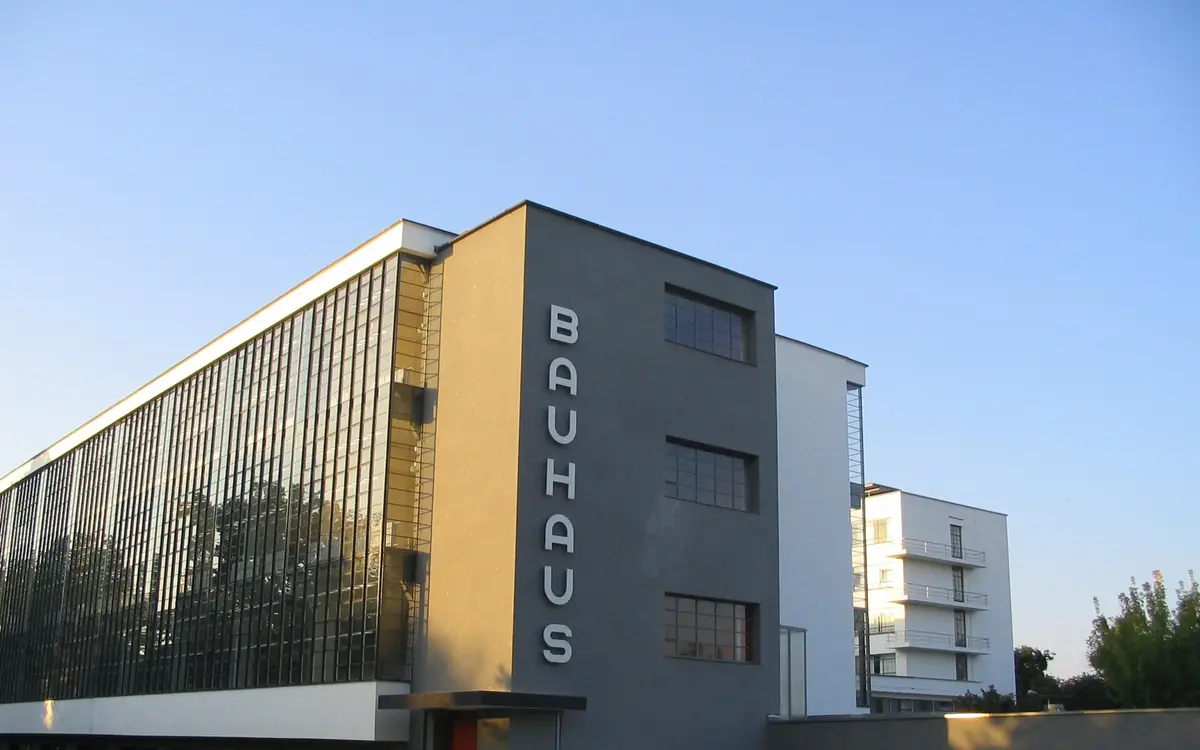
The Bauhaus was a German design school founded in Weimar in 1919 and moved to Dessau in 1925. Both cities still hold its best-known sites: the Bauhaus Museum Weimar, plus the Bauhaus Building and Masters' Houses in Dessau. If you like architecture, furniture or graphic design, it is worth a full weekend by train.
Most people know the Bauhaus from chairs, lamps and posters without knowing where it happened. Two cities about two hours apart give you the whole story, from the first experiments to the finished buildings. This guide covers the sites, tickets, the train link and a simple two-day plan. Prices and hours change, so check the official sites before you book.
Quick facts
- Getting there: Weimar and Dessau have no direct train. Expect roughly two hours with changes (a sample Deutsche Bahn search showed about 1 hour 50 minutes), so plan around two hours.
- Best time: April to October for longer opening hours, but the museums work well in any season.
- Time needed: two days, one in each city.
- Cost: Bauhaus Museum Weimar 11 euros; Dessau all-in-one ticket 29 euros (19 reduced).
- Ticket tip: the Weimar museum sells time-slot tickets (booking a slot costs nothing extra) through the Klassik Stiftung ticket shop or at the desk. Book a slot before you travel.
- Free entry: children under 16 in Weimar; up to 18 in Dessau.
What was the Bauhaus?
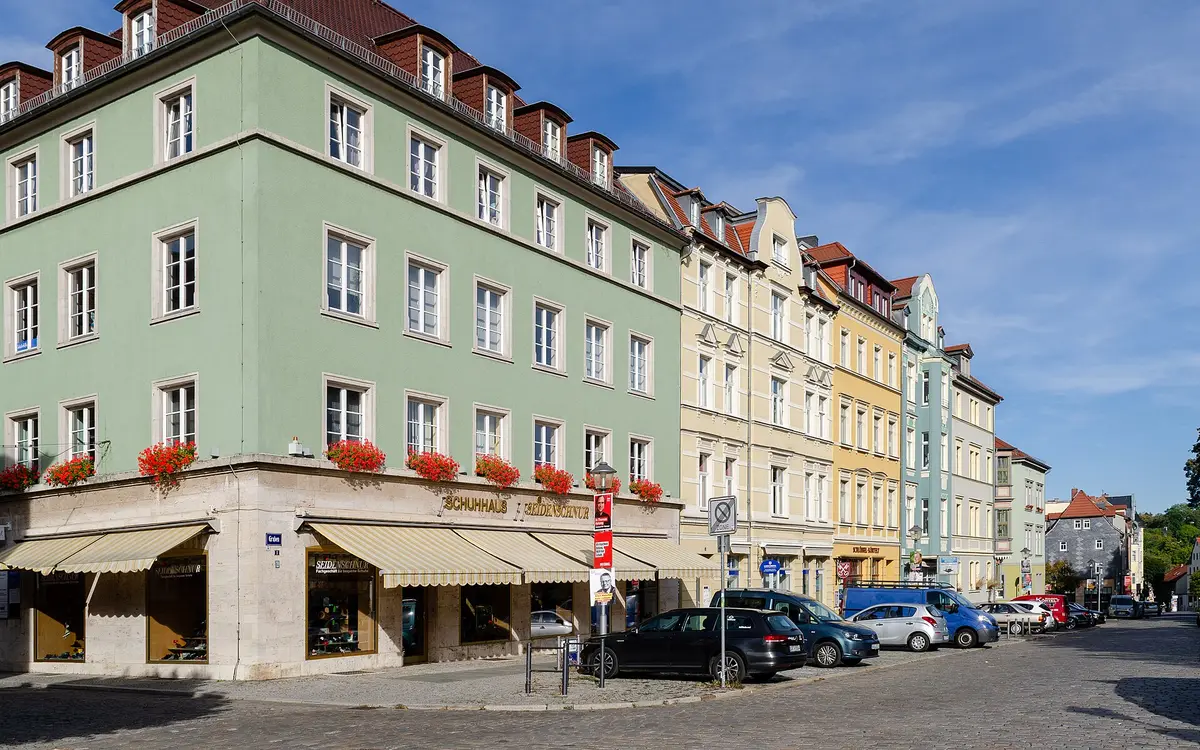
The Bauhaus was a school of art, craft and architecture. Its idea was simple: good design should be useful, affordable and made with industry in mind, not kept for the rich. Teachers and students worked on furniture, textiles, typography and buildings together.
The timeline is short. Walter Gropius founded the school in Weimar in 1919. It moved to Dessau in 1925, where Gropius designed the school building. In 1932 it relocated to Berlin as a private school, and it dissolved in 1933 under pressure from the Nazi regime. Barely fourteen years, yet its ideas still shape how furniture and buildings are designed.
What is the Bauhaus UNESCO listing?
UNESCO inscribed "Bauhaus and its Sites in Weimar and Dessau" in 1996. The original listing covers buildings in Weimar (the former Art School, the Applied Art School and the Haus Am Horn) and in Dessau (the Bauhaus Building and the group of seven Masters' Houses). An extension in 2017 added the Houses with Balcony Access in Dessau and the ADGB Trade Union School in Bernau, near Berlin, and the property was renamed to include Bernau. Details are on the UNESCO World Heritage Centre page.
One point catches visitors out: the Törten housing estate in Dessau is not part of the UNESCO listing, although it is a Gropius project and part of the Bauhaus story.
What can you see at the Bauhaus Museum Weimar?
The Bauhaus Museum Weimar stands at Stéphane-Hessel-Platz 1 and tells the early years of the school, from the 1919 founding to the move in 1925. It is run by the Klassik Stiftung Weimar, which also looks after the city's other museums.
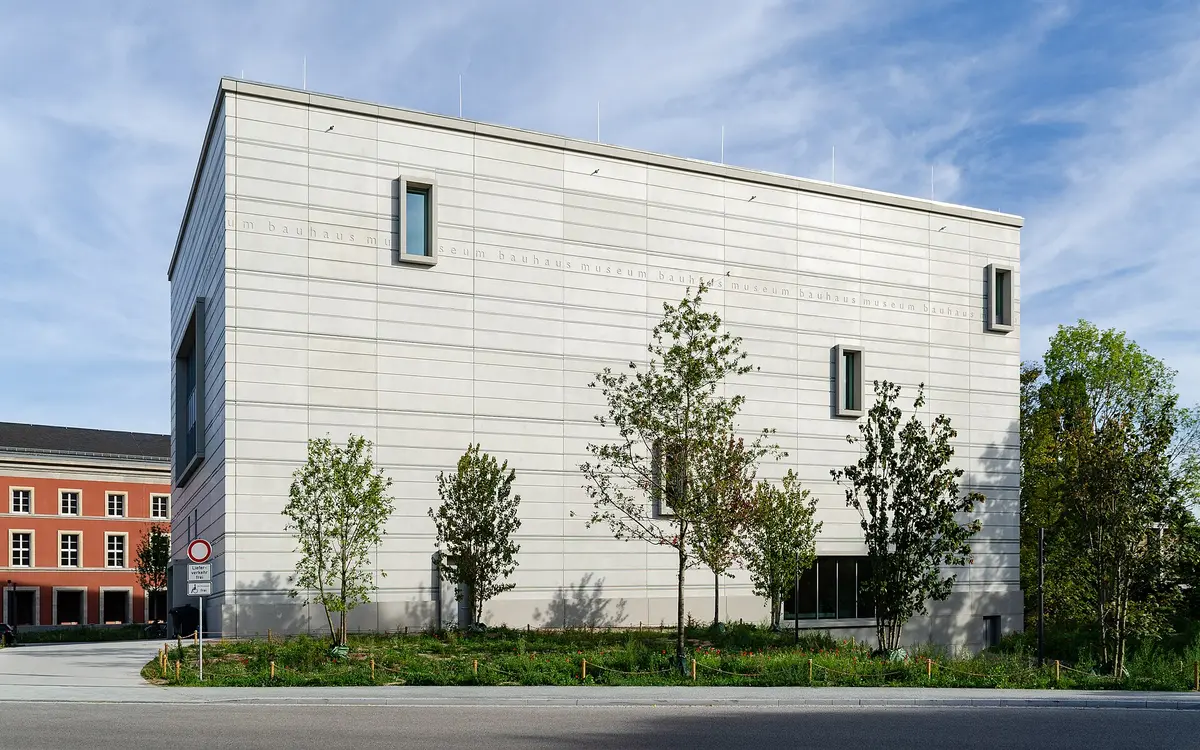
Adult tickets cost 11 euros and reduced tickets 8 euros, per the Klassik Stiftung Weimar. Summer hours (listed as Wednesday to Monday, 9:30 to 18:00) differ from winter hours, and the museum is closed on Tuesdays all year. Tickets are time-slot tickets, so the entry hour is fixed when you book.
If you plan to see more than one museum in town, look at the ModernismCard. It costs 17 euros (12 reduced) and gives one entry each to the Bauhaus Museum Weimar, the Museum Neues Weimar and Haus Am Horn, per the Klassik Stiftung's 2026 flyer. Check the Klassik Stiftung for current validity and booking rules.
What is there to see in Dessau?
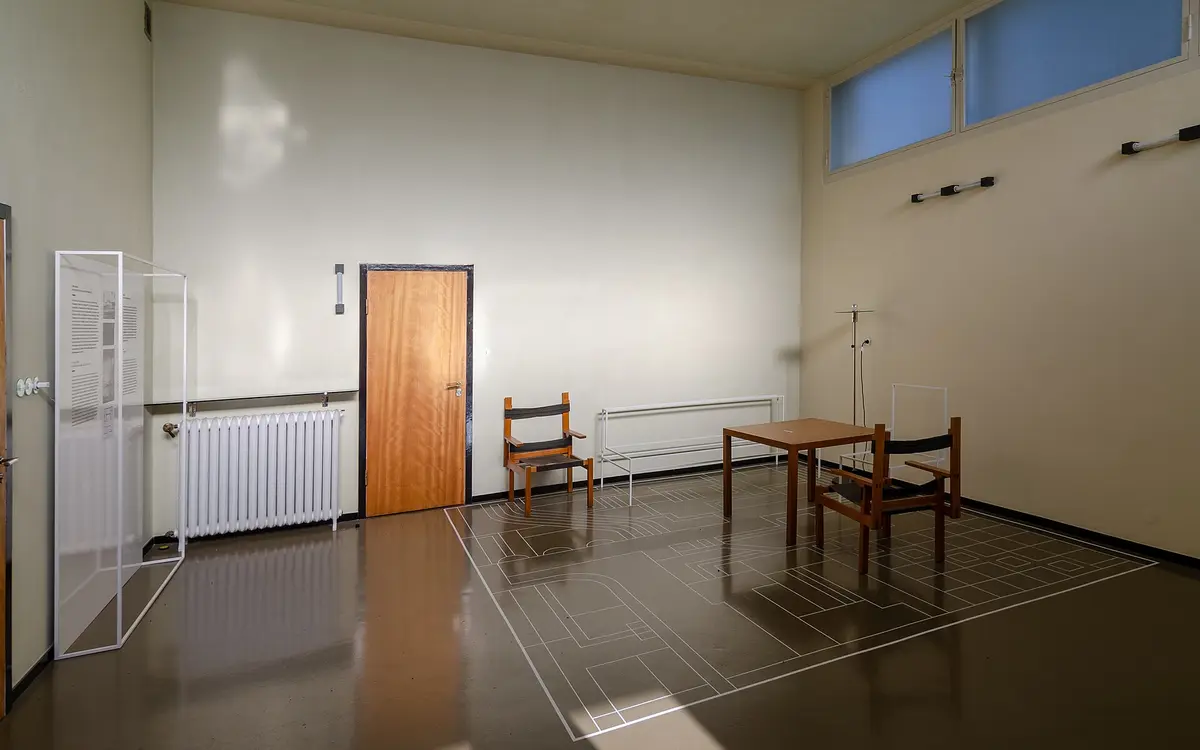
Dessau is where the Bauhaus built its own showpieces. Four places matter:
- Bauhaus Building: Gropius's school building from the Dessau years and the centre of the UNESCO listing.
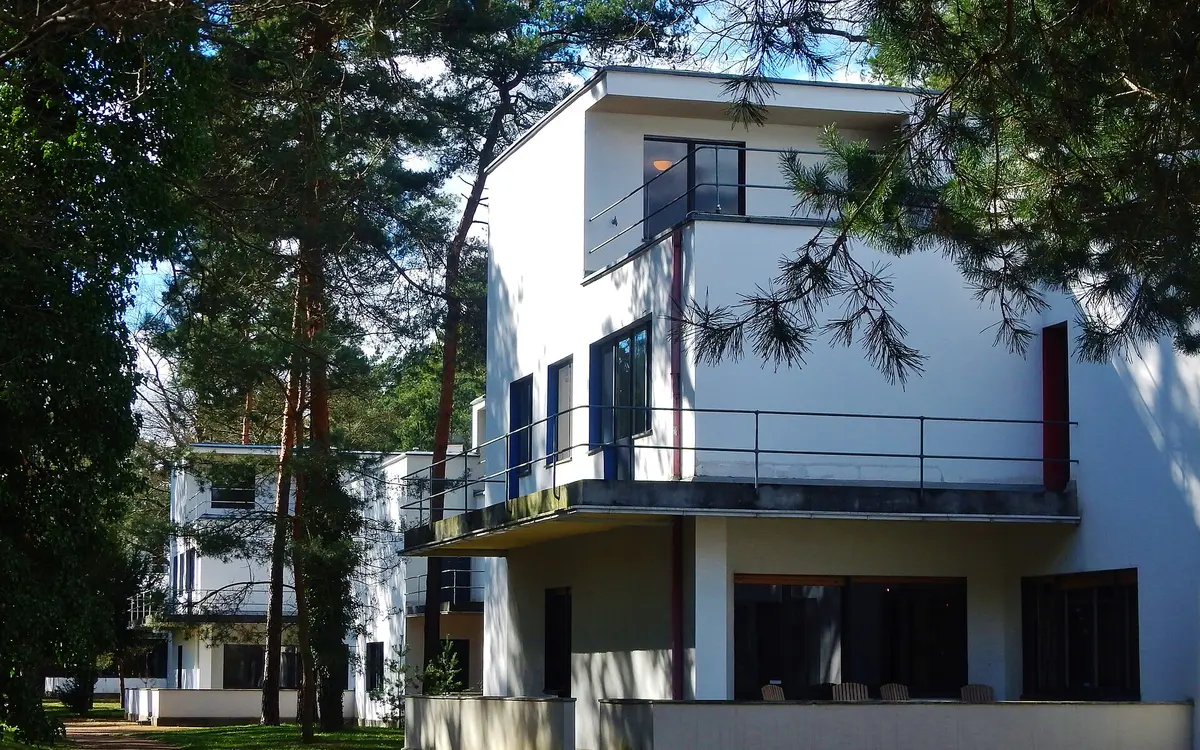
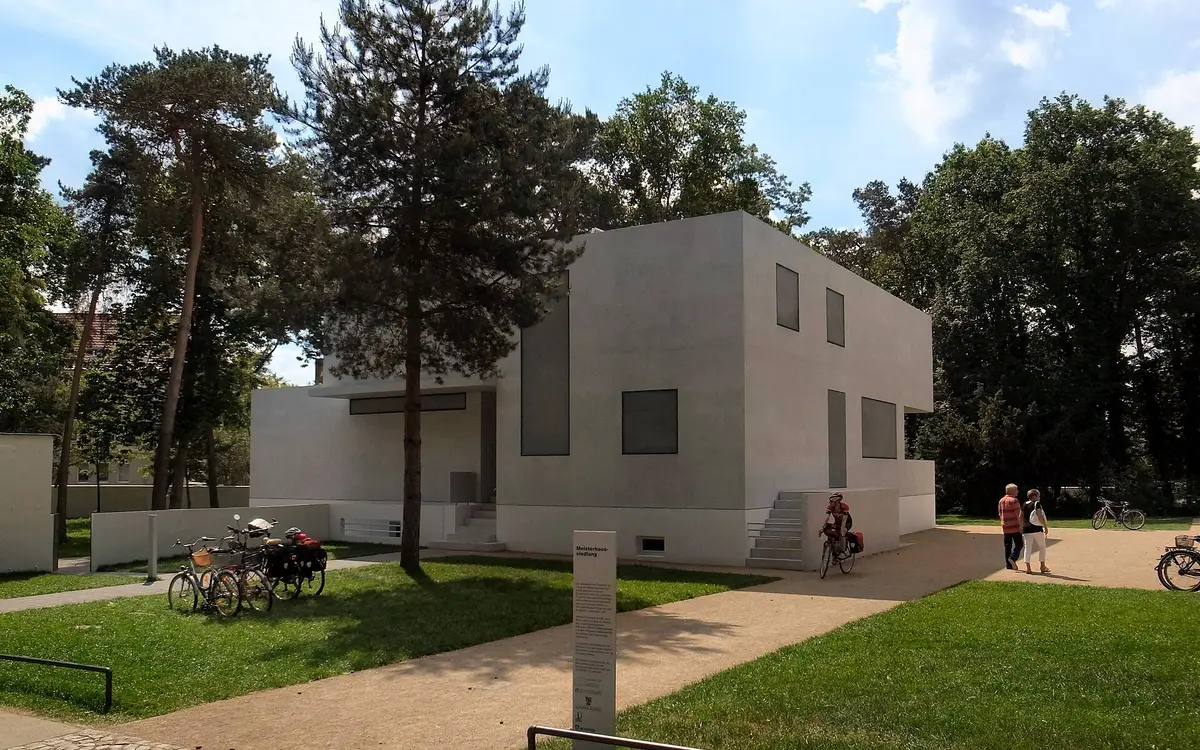
- Masters' Houses: the semi-detached homes built for Gropius and the teachers.
- Bauhaus Museum Dessau: a newer museum with the collection of objects, furniture and workshop pieces.
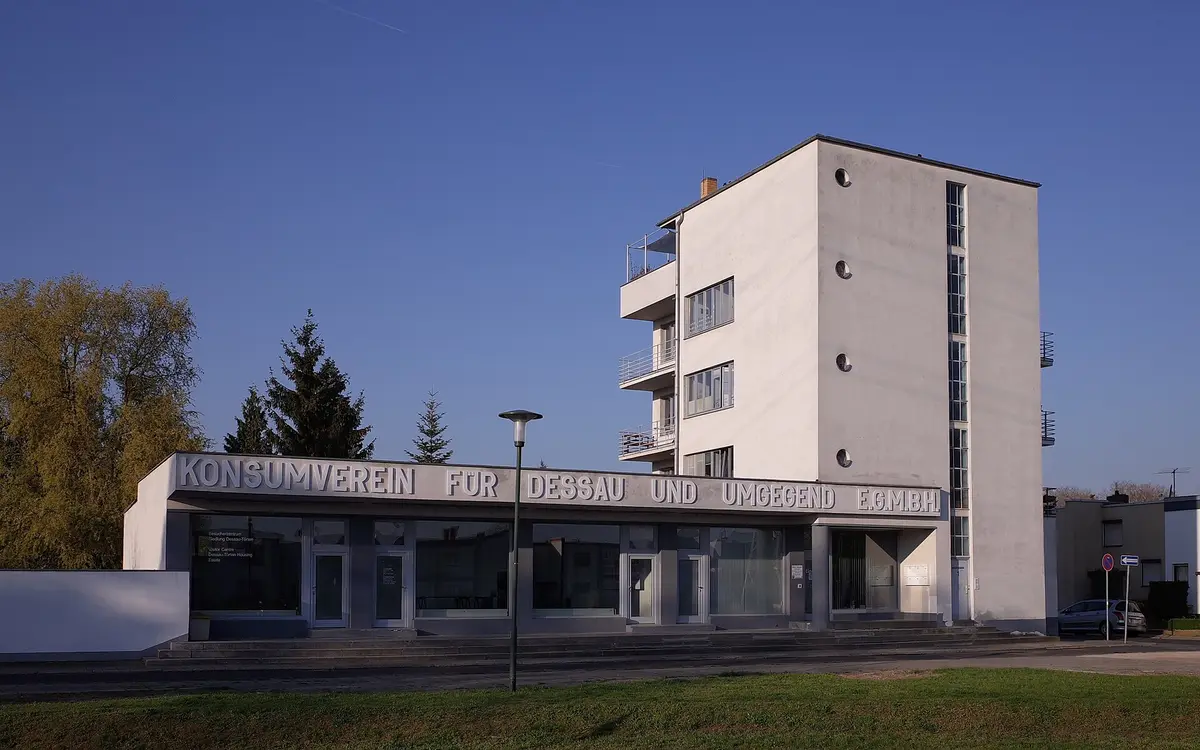
- Törten estate and Konsum Building: the Gropius housing estate and its cooperative shop, a short ride from the centre.
The Stiftung Bauhaus Dessau ticket page lists an all-in-one ticket at 29 euros (19 reduced). It covers the Bauhaus Museum Dessau, the Bauhaus Building, the Masters' Houses, and the Konsum Building, and is valid for three consecutive days. The Bauhaus Museum Dessau alone is 10 euros (6 reduced) and the Bauhaus Building is 14 euros (8 reduced). Children and young people up to 18 are free.
Opening days and hours differ by site and season, and the Konsum Building has the shortest season, so check the foundation's opening-hours page before you go.
How do you get from Weimar to Dessau by train?
There is no direct train. A sample search on bahn.de for Weimar to Dessau Hbf showed a fastest trip of about 1 hour 50 minutes with changes. Fares vary with date and flexibility, so always check the Deutsche Bahn journey planner for your date.
The Deutschlandticket helps here. It costs 63 euros a month and is valid on local and regional trains across Germany, but not on ICE, IC or EC trains. Details are on bahn.de. It rises to 66.80 euros on 1 January 2027. If you already hold one, choose regional connections in the planner and the whole trip may cost nothing extra. Our guide to weekend trips in Germany by train explains how to filter for regional-only routes.
What about the Bauhaus-Archiv in Berlin?
The Bauhaus-Archiv / Museum für Gestaltung in Berlin, in a building by Gropius, is closed for renovation and extension. A Kulturstiftung des Bundes project page ties its programme to reopening festivities in 2027, but the date has slipped several times, so check bauhaus.de before you go. For now, Weimar and Dessau are where you see the originals. If you live in Berlin, see our Berlin museums guide and our list of day trips from Berlin for other options.
How do you plan two days on the Bauhaus trail?
Do Weimar first, then Dessau. The Weimar museum is closed on Tuesdays and Dessau's sites keep their own closing days in winter, so Saturday in Weimar and Sunday in Dessau is the safest pairing. Treat the times below as a suggestion, not a timetable. Keep your health insurance card with you on a two-day trip like this; our guide to health insurance in Germany explains how public and private cover work.
- Day 1, Weimar: 10:00 Bauhaus Museum Weimar (allow two hours). 12:30 lunch in the old town. 14:00 Museum Neues Weimar or Haus Am Horn, using the ModernismCard if it suits you. Late afternoon: walk the old town and park.
- Day 2, Dessau: leave Weimar around 08:00 for a 10:00 arrival. 10:15 Bauhaus Building (about 90 minutes). 12:30 lunch. 13:30 Masters' Houses. 15:00 Bauhaus Museum Dessau. Add Törten and the Konsum Building if you have the time and they are open.
- Return: trains run into the evening, but check the last connection when you book.
Staying in Erfurt is a sensible option, since it is close to Weimar and has more hotel choice. See our Erfurt travel guide for where to stay and eat. For a wine stop on the way back, our Saale-Unstrut wine region guide covers a nearby area.
When is the best time to go, and what does it cost?
Spring to early autumn gives longer hours and time to walk between Dessau's sites. Winter is quieter, with shorter hours. Summer weekends can fill the Weimar time slots, so book early.
A realistic budget for two days, excluding hotel: about 11 euros in Weimar, 29 euros for the Dessau all-in-one ticket, and train fares, which vary. With a Deutschlandticket the trains may cost nothing extra. A hotel night in either city is the main variable, and our cost of living guide helps you see what a weekend adds to your monthly budget.
FAQ
Is the Bauhaus Museum Weimar worth visiting?
Yes, if you want the early story of the school. It covers 1919 to 1925 and sits in a city small enough to walk. Book a time slot first.
Do I need to book tickets in advance?
For Weimar, yes. The Bauhaus Museum sells time-slot tickets (booking a slot costs nothing extra) online or at the desk. Dessau tickets are sold through the foundation's online shop or on site.
How long does it take to get from Weimar to Dessau?
A sample Deutsche Bahn search showed about 1 hour 50 minutes, with changes. There is no direct train, so check bahn.de for your date.
Which Bauhaus sites are UNESCO World Heritage?
The 1996 listing covers the former Art School, Applied Art School and Haus Am Horn in Weimar, and the Bauhaus Building and Masters' Houses in Dessau. In 2017 the Houses with Balcony Access in Dessau and the ADGB school in Bernau were added.
Is the Bauhaus-Archiv in Berlin open?
No. It is closed for renovation and extension, with a reopening linked to 2027. Check bauhaus.de for the current date.