Weekend Trips in Germany by Train: 12 Ideas
Twelve weekend trips in Germany by train, from Regensburg to Rügen, plus how the Deutschlandticket, Sparpreis tickets and BahnCard work and when to book.
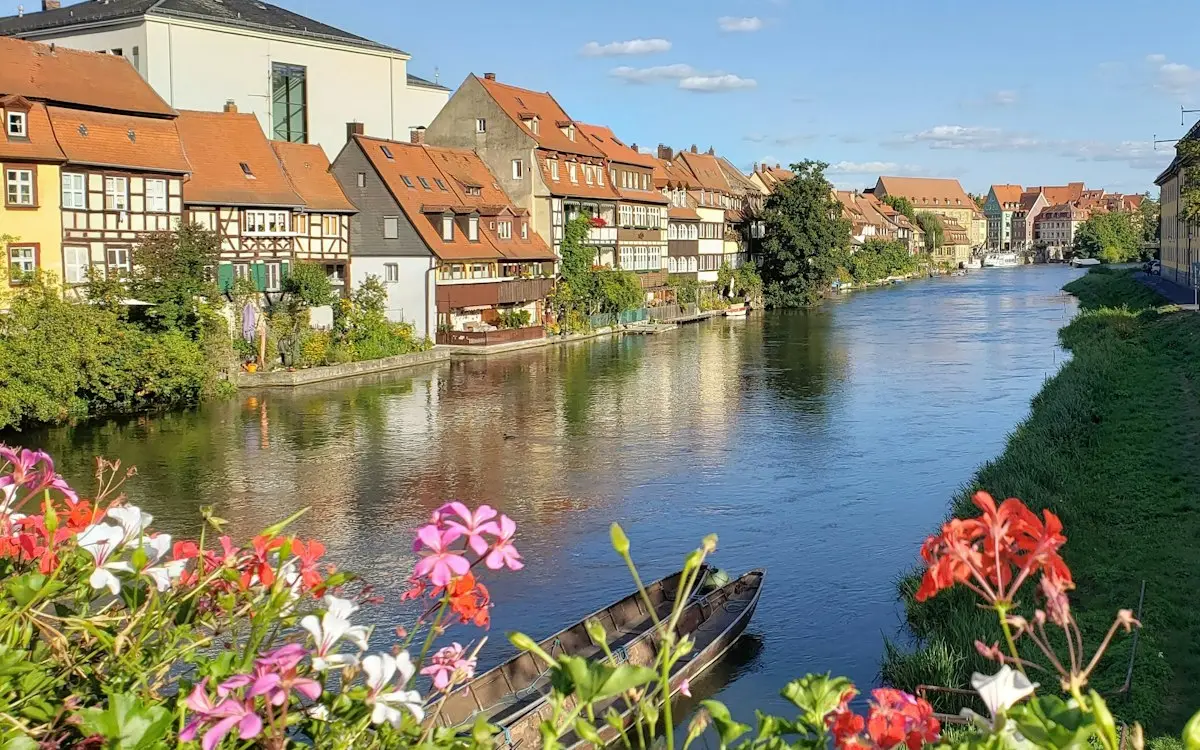
Living in Germany makes weekend trips easy, because the rail network reaches almost every town worth visiting. You do not need a car, and you can read, work or look out of the window instead of watching the autobahn. The harder part is choosing where to go and which ticket to buy.
This guide covers twelve of the best places to visit in Germany by train for a weekend, and then explains the ticket options so you do not pay more than you need to.
Quick facts
- Deutschlandticket: 63 euros per month, valid on local and regional transport across Germany, but not on ICE, IC or EC trains.
- Fast trains: ICE and IC journeys need a separate ticket. Sparpreis fares start at 21.99 euros one way in 2nd class, depending on availability.
- Booking window: Sparpreis tickets can be booked up to 12 months ahead.
- BahnCard 25: from 62.90 euros, with 25% off Flexpreis and Sparpreis fares.
- Best for regional trips: Regensburg, Bamberg, Heidelberg, Saxon Switzerland, Freiburg and Quedlinburg.
- Best for a longer ride: Lübeck, Wismar, Rügen and Lake Constance, where an ICE or a change of trains helps.
Which weekend trips in Germany are worth it by train?
The list below goes roughly from south to north. Every town has a station you can walk out of and be in the old centre within minutes or a short bus ride. For journey times and connections, use the DB Navigator app or bahn.de, because timetables change with each season.
Regensburg
Regensburg sits on the Danube in Bavaria and has one of the best preserved medieval centres in the country. The Old Town with Stadtamhof was added to the UNESCO World Heritage List in 2006. Walk across the Stone Bridge, look at the cathedral and spend an evening in the riverside beer gardens. It is compact enough that two days are plenty.
Bamberg
Bamberg's old town has been on the UNESCO list since 1993. It is known for its hilly layout, the former fishermen's houses along the Regnitz and the local smoked beer, Rauchbier. Plan to walk a lot, and book a table in advance if you want dinner on a Saturday.
Heidelberg
Heidelberg is a classic for a reason: a ruined castle above the Neckar, a long pedestrian street and a university town atmosphere. It is close to Frankfurt, Stuttgart and Mannheim, so it works well if you live in the Rhine-Main or Rhine-Neckar region. Go early in the day, as the castle and old bridge fill up with day visitors from midmorning.
Freiburg and the Black Forest
Freiburg is the usual base for the southern Black Forest. The old town has small streams running along the streets and a market around the minster. From the city you can reach hiking trails by tram, bus or regional train, which makes it a good choice if you want one day in a city and one in the woods. Check the local transport association's site for how far your ticket reaches.
Lake Constance
Konstanz, Lindau, Meersburg and Friedrichshafen all sit on the lake, and regional trains link several of them. The practical point is that ships are normally a separate fare. Scheduled passenger ships are generally not counted as local public transport, so do not assume your Deutschlandticket covers them, and check the operator's page before you board. A walk along the shore costs nothing, and the Swiss side is a short hop away, so bring your passport or ID card.
Dresden
Dresden has a rebuilt baroque centre, a long list of museums and a lively district across the Elbe, the Neustadt. It is also well connected to Berlin and Leipzig, which makes it one of the easier city weekends if you live in eastern Germany. Our full Dresden travel guide covers the sights and a two-day route.
Saxon Switzerland
From Dresden, the S-Bahn line S1 follows the Elbe to Pirna, Rathen, Königstein and Bad Schandau. This is the gateway to the sandstone rock formations of Saxon Switzerland, with marked hiking routes and viewpoints. The S-Bahn is part of regional transport, so the Deutschlandticket applies to it. The Elbe ferry at Rathen is a separate case, so check the VVO site before you rely on your ticket for it. Pack proper shoes, and note that service patterns on the outer sections can change during construction work.
Quedlinburg
Quedlinburg in the Harz foothills is a town of timber-framed houses, narrow lanes and a castle hill. The Collegiate Church, Castle and Old Town were inscribed as a UNESCO World Heritage Site in 1994. It is a quieter option, and a good one if you want a slow weekend. Regional trains reach the area, and you can combine it with a hike in the Harz.
Cologne
Cologne is easy to reach from most of western Germany and has the cathedral, a strong museum scene and a Rhine promenade. If you already live in North Rhine-Westphalia, the Deutschlandticket makes it a cheap day or weekend trip. In winter it also has Christmas markets, which we cover in our guide to Christmas markets in Germany.
Lübeck
Lübeck's old town sits on an island, surrounded by water, and was the first old town ensemble in northern Europe to be listed by UNESCO, in 1987. The brick Gothic churches and the Holstentor gate define the skyline. Try the local marzipan, and leave time to wander the courtyards between the main streets.
Wismar
Wismar and Stralsund were listed together in 2002 as Hanseatic trading towns that spread brick Gothic building techniques around the Baltic. Wismar is small, calm and has a preserved old harbour basin. It suits a weekend where you want to walk, eat fish and not rush.
Rügen
Germany's largest island is reachable by rail via Stralsund. Once there, the narrow-gauge steam railway known as the Rasender Roland runs for about 24 kilometres between Putbus and Göhren, passing several seaside resorts. Fares and whether your Deutschlandticket is accepted depend on the operator, so check before you travel. Beach season is short, so aim for late spring to early autumn, or accept a windy and empty coast in the off season. For a longer coastal trip, see our Stralsund, Rügen and Usedom trip guide.
Is the Deutschlandticket or an ICE ticket better?
It depends on how far you go and how often. The Deutschlandticket costs 63 euros per month and is a subscription. It is valid on buses, trams, U-Bahn, S-Bahn and regional trains (RB, RE) across Germany. It is not valid on DB long-distance trains (ICE, IC, EC) or on other long-distance operators such as FlixTrain.
That has one big consequence for weekend trips. Many of the places above can be reached by regional trains only, which are slower but cost you nothing extra if you already have the ticket. Regensburg, Bamberg, Heidelberg, Saxon Switzerland, Quedlinburg and Cologne are often easy to do this way depending on where you start. Lübeck, Wismar, Rügen and Lake Constance usually mean a long trip, so many people combine one fast train with regional legs.
Two tips if you are weighing the options:
- If you already have a Deutschlandticket for commuting, your marginal cost for regional trips is zero. Our cost of living guide shows where transport fits into a monthly budget.
- If you do not use public transport often, compare 63 euros per month with what you would spend on Sparpreis tickets. The ticket can be cancelled monthly: you must cancel by the 10th of a month, and the cancellation takes effect at the end of that month.
How do Sparpreis tickets work?
A Sparpreis is a discounted long-distance fare for ICE, IC and EC trains. According to Deutsche Bahn, prices start at 21.99 euros in 2nd class for a one-way trip, depending on availability. The cheapest fares sell out first, so the price you see for a Friday evening can be well above that.
The main conditions to know:
- Train binding: the fare is valid only on the connection you booked. You must use the trains listed on your ticket. Regional trains to and from the station can be added to the booking without a fixed train, but the journey must end by 10:00 the next day.
- Cancellation: before the first travel day you can cancel for a 10 euro fee, and the refund comes as a voucher. Digital tickets can be cancelled free of charge within three hours of booking. From the day of travel, cancellation is not possible.
- Children: children under 6 travel free. Children aged 6 to 14 travel free with a person aged 15 or older, but must be listed when you book.
If your plans are not fixed, the more flexible Flexpreis costs more but is not tied to a single train. For a weekend away, a Sparpreis is usually the better value, as long as you can commit to the dates.
Is a BahnCard worth it for weekend trips?
A BahnCard gives a fixed discount on long-distance fares. The BahnCard 25 starts at 62.90 euros and takes 25% off both Flexpreis and Sparpreis fares. The BahnCard 50 starts at 244 euros and takes 50% off Flexpreis, with 25% off Sparpreis fares. DB also sells trial versions of both cards that run for three months, with the BahnCard 25 trial from 19.90 euros.
The simple test: add up what you expect to spend on long-distance tickets in a year. If a 25% saving would cover the card price, it pays off. For most people who make a few ICE trips a year, the trial BahnCard 25 is a low-risk way to find out. Read the terms when you buy, including what happens when the trial ends.
When should you book?
Sparpreis tickets can be booked up to 12 months in advance, and the cheapest seats tend to go first. For a popular weekend, such as a long weekend, a public holiday or the Christmas market season, book as soon as you know your dates. If you are travelling on regional trains with a Deutschlandticket, there is nothing to book, though trains on summer weekends to the coast and to popular hiking areas can be full.
Two practical points:
- Reserving a seat is optional on most trips, but it is worth the extra cost on busy ICE routes on Friday afternoon and Sunday evening.
- Keep your return flexible if your route has several changes. A Sparpreis return is tied to specific trains, and a missed connection on a regional leg is easier to handle if you have a buffer.
If you live in Berlin and want ideas that do not involve a train at all, see our guide to exploring Berlin by boat. If you are new to the city, our guide to moving to Berlin explains how local transport works.
FAQ
What is the best weekend trip in Germany by train?
It depends on where you start. For a first trip, Regensburg, Bamberg and Heidelberg are easy to enjoy in two days and have compact old towns. If you prefer nature, choose Saxon Switzerland or the Black Forest around Freiburg.
Can I use the Deutschlandticket on an ICE?
No. The Deutschlandticket is not valid on DB long-distance trains (ICE, IC, EC). You can use it for the regional legs before and after a long-distance ride, but you need a separate ticket for the fast train.
How early should I book a Sparpreis?
Tickets go on sale up to 12 months ahead, and the lowest fares are limited. Book as soon as your dates are fixed. Keep in mind that a Sparpreis is tied to specific trains and has limited cancellation options.
Is the BahnCard worth it?
It can be, if you take several long-distance trips a year. The BahnCard 25 starts at 62.90 euros and gives 25% off Sparpreis and Flexpreis fares. A three-month trial version from 19.90 euros is a cheap way to test it.
Do I need a car for these trips?
No. All twelve destinations can be reached by train, and most old towns are walkable from the station or a short bus ride away. For areas such as Saxon Switzerland, the Black Forest and Rügen, local trains, buses and the island railway cover the main spots. Check local timetables, because service is less frequent outside cities. If you cycle, our cycling guide covers the basics.
Planning to stay in Germany long term? A trip is easier when your paperwork is in order. See our guide to health insurance in Germany.