Finding an Apartment in Germany
Germany's rental market is competitive and paperwork-heavy. A step-by-step guide to finding, applying for, and safely signing your Mietvertrag.
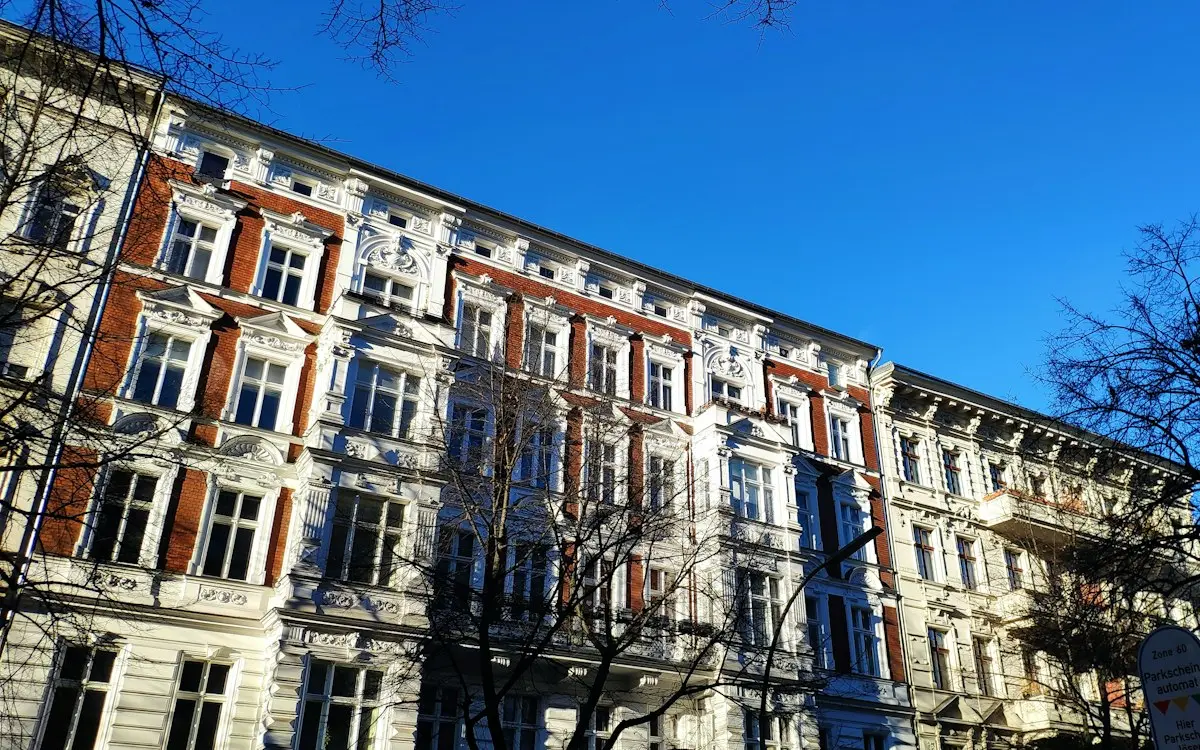
Finding an apartment in Germany is one of the biggest challenges expats face, not because the country lacks housing, but because demand in major cities massively outstrips supply. With the right preparation and a complete application package ready to go, you dramatically increase your chances. This guide explains everything from the language to the legal fine print.
Once you have keys, set up electricity and gas contracts, sort out internet and mobile contracts, and if you plan to buy instead, read our mortgage guide for expats.
The German rental market, what you're walking into
Germany is a renter's country. Over 50% of the population rents rather than owns, which means the rental market is large, but competition for good properties is fierce. Vacancy rates in Berlin, Munich, Frankfurt, Hamburg, and Stuttgart regularly sit below 1%. In practice, a well-priced apartment in a desirable neighbourhood can receive 50–200 applications within 24 hours of being listed.
The market has tightened significantly over the past decade. New construction has not kept pace with population growth, especially in major cities with large expat and international student communities. What this means for you: speed matters, preparation matters, and a complete application package is not optional.
That said, the market is not impossible. People find apartments every day. The ones who succeed quickly are those who treat the search like a job, checking listings multiple times a day, applying immediately, and sending a professional, complete package every time.
Set up alerts immediately. On ImmobilienScout24 and ImmoWelt, create saved searches with notifications turned on. The difference between getting a viewing and being ignored is often a matter of hours.
Key terminology you need to know
German rental listings are full of terms that don't translate intuitively. Here are the most important ones:
Kaltmiete vs Warmmiete
The Kaltmiete (cold rent) is the base rent, the amount that goes directly to the landlord. The Warmmiete (warm rent) includes the Nebenkosten (see below) on top. Always check which figure is quoted in a listing, in Germany, both are common and they can differ significantly. Budget around the Warmmiete, not the Kaltmiete.
Nebenkosten
Nebenkosten are additional running costs: heating, water, building maintenance, building insurance, property management fees, and sometimes internet or garbage collection. They are typically €100–250/month on top of the Kaltmiete, depending on the size of the apartment and the heating system. Landlords estimate Nebenkosten as a monthly advance (Vorauszahlung) and then settle the difference annually with an Abrechnung (statement). If your actual costs were higher than your advances, you pay the difference. If lower, you receive a refund.
Kaution (deposit)
German law caps the deposit at three months' cold rent (Kaltmiete). You can pay it in up to three equal monthly instalments, the first due when the tenancy starts. The landlord must keep it in a separate account, apart from their own money. You get it back, with interest, when you move out, assuming no damage claims. Getting your deposit back promptly is one of the most common sources of conflict; document everything carefully (see the section on the Übergabeprotokoll).
Provision / Maklergebühr
Since 2015, the "Bestellerprinzip" law requires whoever hires a real estate agent to pay their fee. In practice this usually means landlords pay, so most apartment listings today are provisionsfrei (no commission for the tenant). If you see "Provision" listed, it means the agent is charging you directly, which is increasingly uncommon for residential rentals.
Wohnfläche
The official living area in square metres. German law has specific rules about what counts, balconies are included at 25–50%, basements and attics usually not at all. The advertised Wohnfläche can sometimes be generously calculated; see for yourself at the viewing.
Types of listings
WG, Wohngemeinschaft (shared flat)
A WG is a shared apartment where each person has their own room and shares communal spaces (kitchen, bathroom, living room). These are extremely popular among younger expats and students. WG rooms are typically cheaper per square metre than solo apartments and often available on shorter notice. The main platform for WG searches is WG-Gesucht. When applying for a WG room, you're often "applying to the flatmates", a personal intro matters more than in a standard rental.
1-Zimmer-Wohnung (one-room apartment)
A 1-Zimmer is a studio or one-room apartment, one main room plus a separate kitchen and bathroom. A 2-Zimmer has two rooms, and so on. In Germany, rooms are counted separately from the kitchen and bathroom, so a "2-Zimmer" is closer to what English speakers would call a one-bedroom.
Altbau vs Neubau
Altbau (old building) refers to pre-war or early post-war construction, typically characterized by high ceilings, thick walls, ornate stucco, and wooden floors. They have charm but can be poorly insulated and have higher heating costs. Neubau (new construction) means modern buildings, better insulation, lower energy costs, but often less character and higher rents. Both have their advocates; energy efficiency is worth considering given German heating costs.
Möbliert vs unmöbliert
Most German apartments are rented unmöbliert (unfurnished), and this means truly unfurnished. Often there are no light fittings, no kitchen (Einbauküche), and occasionally no floor covering. When a kitchen is included it will be noted explicitly ("mit EBK" or "Einbauküche vorhanden"). Möblierte Wohnungen (furnished) are usually short-term rentals at a premium and more common in expat-heavy platforms.
Where to search
ImmobilienScout24
The largest German property portal by a significant margin. Most professional landlords and agencies list here. Set up a saved search with email or push notifications and check it at least twice a day. The premium "Scout+" membership is worth considering if you're in a highly competitive market, it lets you see how many applications a listing has received and jump to the top of the list.
ImmoWelt
The second-largest platform, with some listings that don't appear on ImmobilienScout24. Worth running searches in parallel. Interface is similar; same strategy applies.
WG-Gesucht
The dominant platform for flatshares. Also increasingly used for short-term furnished rentals and sublets. If you need accommodation quickly upon arrival, before you've found a permanent place, WG-Gesucht is your first stop. Write a personal profile that's warm and specific; flatmate searches are social as much as logistical.
Kleinanzeigen (formerly eBay Kleinanzeigen)
Germany's Craigslist equivalent. Private landlords with one or two properties often list here rather than on the big portals, which can mean less competition and a more personal relationship. Be more cautious about scams; never transfer money before viewing a property in person.
Facebook groups
Search for "[City] Expats Housing", "[City] Apartments for Rent", or "[City] English Speaking". These groups often have listings not found anywhere else, and landlords in these groups are often specifically open to renting to international tenants. Berlin, Munich, Frankfurt, and Hamburg all have active groups with thousands of members.
Company noticeboards and word of mouth
In large international companies, especially in tech, internal Slack channels or noticeboards often carry apartment listings from colleagues leaving Germany or downsizing. Ask around. A warm introduction is worth more than a cold application on a portal.
Your application package (Bewerbungsmappe)
Landlords in Germany receive far more applications than they have apartments. Your Bewerbungsmappe (application package) is your first impression. Have every document ready as a single clean PDF so you can send it within minutes of finding a listing you want.
The standard package includes:
- SCHUFA Bonitätsauskunft: Your German credit report, not older than 3 months. Get yours at meineschufa.de (see below). This is non-negotiable for most landlords.
- Last 3 payslips (Gehaltsabrechnungen): Landlords typically want to see that your gross monthly income is at least 3x the monthly cold rent. If you're employed, these are straightforward. If you're self-employed, your last two tax assessments (Einkommensteuerbescheid) serve the same purpose.
- Passport copy: A clear copy of your photo page. If you have a residence permit (Aufenthaltstitel), include that too.
- Mietschuldenfreiheitsbescheinigung: A letter from your previous landlord confirming you left with no outstanding rent debt. This is a standard document in Germany; most landlords issue it routinely when you move out. If you're coming from abroad where this isn't a concept, a brief explanation letter from you alongside any available reference is an acceptable substitute.
- Selbstauskunft: A standard tenant self-disclosure form. Landlords often have their own version; there are also standard templates online. It covers your income, employment status, number of people moving in, pets, and similar basics. Fill it in honestly, false statements are grounds for termination of the contract.
- Short cover letter or personal intro: Optional but effective. One paragraph: who you are, where you work, why you want this apartment. Keep it professional and warm.
Compile this as a single PDF. Name it clearly, e.g. "Application_YourName_[Street].pdf". Landlords and agents receiving 100 applications don't want to open six separate attachments. A single organised file signals that you are a reliable, organized tenant.
SCHUFA, what it is and how to get yours
SCHUFA (Schutzgemeinschaft für allgemeine Kreditsicherung) is Germany's main credit reference agency. It collects data on your financial behaviour: whether you pay bills on time, how many bank accounts and credit cards you have, and whether you've ever defaulted. The result is a Bonitätsscore, a percentage representing your creditworthiness.
A score above 97% is considered excellent. Below 90%, landlords and lenders become cautious. Most landlords will not proceed without a SCHUFA report, it's the single most important document in your application package.
Getting your free SCHUFA report
Under GDPR (Article 15), you are legally entitled to one free copy of your SCHUFA data per year. Request it at meineschufa.de, look for "Datenkopie (nach Art. 15 DSGVO)" rather than the paid options. The free report arrives by post in about two weeks. It contains the same information as the paid version, the paid one is just faster and formatted differently.
For apartment applications, landlords typically want a report no older than 3 months. If you're planning a move, request your report 2–3 months before you expect to start searching.
New to Germany? Your SCHUFA may be empty
If you've just arrived, your SCHUFA file will be empty, no positive or negative entries. Some landlords treat an empty SCHUFA as a mild concern; others are fine with it and will weight your income and employment status more heavily instead. To build a positive SCHUFA history quickly: open a German bank account and register a mobile phone contract in your name. After 6–12 months of on-time payments, you'll have an established score.
Negative SCHUFA entries
Missed payments, debt defaults, and insolvency all create negative entries. A Schufa entry from a legitimately paid-off debt should be deleted within three years of settlement; check that this has happened. If you believe an entry is incorrect, you can file a dispute with SCHUFA directly, they are required to investigate and correct errors.
How to stand out in a competitive market
With dozens of applicants per apartment, the difference between a viewing invitation and silence is often marginal. Here's what moves the needle:
- Apply within hours, not days. Many landlords stop reviewing applications once they have 20–30 solid ones. Set up instant alerts and apply the moment something goes live.
- Send a complete package immediately. Don't follow up with documents, send everything in one email. Landlords who have to ask for missing documents often just move on.
- Write a short personal intro. Two or three sentences: your profession, how long you've been in Germany, why this apartment suits you. It makes your application human. Keep it warm but professional, not a life story.
- Offer prepayment if you can afford it. Offering 3–6 months' rent upfront (in addition to the deposit) is a strong signal in competitive markets, especially if your SCHUFA is empty or you're self-employed. Not all landlords will accept it, but some find it very reassuring.
- Show stable income clearly. Landlords want confidence that rent will arrive every month. If your income is well above the 3x threshold, make that visible in your cover letter.
- Call, don't just email. If a phone number is listed, call the agent or landlord directly after sending your application. It separates you from the mass of email-only applicants and creates a personal connection before the viewing.
The viewing (Besichtigung)
In high-demand cities, viewings are often held as open-house events, multiple applicants arrive at the same time slot, walk through the apartment together, and hand their documents to an agent at the door. This is normal. Treat it as your brief moment to make a good impression: arrive on time, be friendly and professional, and have your documents ready to hand over immediately.
What to check during the viewing:
- Walls and ceilings: Look for mould, water damage, cracks, or discolouration. Check inside wardrobes and behind doors.
- Windows: Open and close them. Check the seals. Poor insulation means high heating costs in winter.
- Heating system: Gas central heating (Gas-Zentralheizung) is standard and efficient. Electric storage heaters (Nachtspeicheröfen) are old technology and expensive to run. Ask what the annual Nebenkosten were for the previous tenant.
- Water pressure and hot water: Run the tap. Check the shower. Slow or lukewarm water is a problem worth noting.
- Mobile signal and internet: Check your phone signal inside. Ask what internet connection is available and whether you can choose your provider.
- Noise: Listen. Is there a busy road outside? Nightclub below? School next door? Visit at different times of day if you can.
- Cellar (Keller) and storage: Most German apartments include a storage unit in the cellar. Check that it's dry and secure.
- Condition of the kitchen: If there's a fitted kitchen (Einbauküche), check every drawer and appliance. If there's no kitchen, you'll need to install one.
Questions worth asking the landlord or agent:
- Why is the previous tenant leaving?
- What were the Nebenkosten last year?
- Is the Mietpreisbremse applied here?
- What is the notice period?
- Are subletting or Airbnb rentals permitted?
- Who do I contact for repairs?
- Is the apartment included in a Hausverwaltung (property management company)?
The rental contract (Mietvertrag)
The Mietvertrag is your rental contract and it governs your entire tenancy. Read it thoroughly, ideally with a German-speaking friend or a Mieterverein (tenants' association) before signing. Once you sign, you're bound by it.
Key clauses to check
- Names on the contract: Everyone who will live in the apartment should be named as a Mieter (tenant). Being a named tenant gives you full legal rights; being an unofficial sub-occupant does not.
- Rent amount and Nebenkosten: Confirm the exact figures match what was advertised. Check whether Nebenkosten are a flat rate (Pauschale) or an advance payment with annual settlement (Vorauszahlung).
- Kündigungsfrist (notice period): The standard notice period for tenants in Germany is 3 months, always to the end of a calendar month. So if you give notice on April 5th, your tenancy ends on July 31st. Landlord notice periods are legally longer, 3 to 9 months depending on how long you've lived there.
- Mietdauer (tenancy duration): Most German tenancies are indefinite (unbefristet). Fixed-term contracts (befristet) are less common and require a legally valid reason. Be cautious of fixed-term contracts, they can leave you in a difficult position if the landlord refuses to renew.
- Schönheitsreparaturen (cosmetic repairs): This is the most contested clause in German rental law. Many contracts include a clause requiring the tenant to repaint walls and carry out minor repairs upon leaving. However, the courts have repeatedly struck down overly rigid Schönheitsreparaturen clauses, particularly those that specify a fixed repainting schedule regardless of actual condition. If your contract contains such a clause, it may be unenforceable. The Mieterverein can advise.
- Pets: Check whether pets are permitted. The contract may say "no pets" or "small pets permitted with landlord's consent." Keeping a pet without permission can be grounds for termination.
- Untervermietung (subletting): If you plan to sublet a room or use short-term rental platforms, check the contract. Most require written landlord consent.
Not sure about a clause? A Mieterverein (tenants' association) membership costs around €60–90/year and gives you access to legal advice from housing lawyers. Worth it, especially before signing a contract with unusual clauses. Find your local association via mieterbund.de. In Berlin, the Berliner Mieterverein is one of the largest in Germany.
The handover protocol (Übergabeprotokoll)
The Übergabeprotokoll is a written record of the apartment's condition at the moment you move in. You and the landlord (or their agent) walk through every room together and document any existing damage, scratches on floors, marks on walls, broken fittings, stains on carpets. Both parties sign it.
This document is your protection when you move out. Without it, a landlord could claim that damage you didn't cause was caused by you. With a thorough Übergabeprotokoll, you have clear evidence of what was already there when you arrived.
Take your own photographs of every room, including inside cupboards, behind doors, and in the bathroom, and date-stamp them. Send them to the landlord by email immediately after the handover so there is a timestamped record. Keep the signed protocol for the entire duration of your tenancy.
The same process happens when you move out, the Rückgabeprotokoll. Walk through the apartment with the landlord, agree on the condition, and get their signature confirming what damage (if any) exists and what the deposit deduction (if any) will be.
Tenant rights in Germany
Germany has some of the strongest tenant protections in Europe. Understanding your rights is not paranoia, it's practical knowledge that can save you significant money and stress.
Mietpreisbremse (rent control)
The Mietpreisbremse (literally "rent brake") limits how much landlords can charge for new tenancies in areas with tight housing markets. It was extended in 2025 and now runs until the end of 2029. In designated areas, which include most major German cities, the rent for a new tenancy cannot exceed the local reference rent (Mietspiegel) by more than 10%. There are exemptions (new construction, extensively renovated properties, high-end properties), but for most standard apartments in Berlin, Munich, Frankfurt, Hamburg, and Stuttgart, the Mietpreisbremse applies.
In practice, many landlords ignore the Mietpreisbremse and charge above the limit, calculating that most tenants won't pursue it. But you can. If you believe your rent is above the legal limit, you can challenge it, first in writing to the landlord, then through the courts or a Mieterverein. Send the complaint (Rüge) in writing within 30 months of the start of your tenancy, and you can claim back rent you overpaid before the complaint. If you complain later, you only get back rent that falls due after the landlord receives it.
Kündigungsschutz (eviction protection)
German law makes it very difficult for landlords to evict tenants. A landlord can only terminate your tenancy for specific legally defined reasons, primarily if they need the apartment for their own use (Eigenbedarf) or a close family member, or if you have breached the contract seriously (e.g., persistent non-payment of rent). Even in these cases, the landlord must give formal written notice and observe the statutory notice period. Courts tend to side with tenants where the legal requirements haven't been precisely met.
You cannot be evicted simply because the landlord sells the property, wants to raise the rent, or finds a tenant they prefer. "Kauf bricht nicht Miete", purchase does not break the tenancy, is a core principle of German rental law. If your landlord sells the building, your contract transfers automatically to the new owner.
Rent increases
A landlord can increase your rent during a tenancy, but only within strict limits. Increases must be justified against the local Mietspiegel, must be given in writing with at least two months' notice, and cannot exceed 20% over three years (or 15% in some protected areas). You have two months to either agree or contest the increase.
Moving out, notice periods and subletting
Giving notice (Kündigung)
To terminate your tenancy, you must give written notice, a signed letter, sent by registered mail (Einschreiben) or handed over in person with a receipt. Email and WhatsApp are not legally sufficient on their own for terminating a German rental contract.
The standard notice period is 3 months to the end of a calendar month. This means: if you send your notice letter on April 15th, the earliest your tenancy can end is July 31st. If you send it on May 1st, the tenancy ends August 31st. Plan accordingly, this is a hard deadline that cannot be shortened by goodwill alone (unless the landlord agrees).
Your Kündigung letter should state clearly: your full name, the property address, that you wish to terminate the tenancy, and the intended end date. Keep a copy of the signed letter and the registered mail receipt.
Subletting (Untervermietung)
If you want to sublet your apartment, either a room while you're away or the whole flat for a period, you generally need your landlord's written consent. They can refuse only if they have a legitimate reason (e.g., the apartment is too small, or the proposed subtenant is objectively unsuitable). If you have a long-term need to sublet a room (e.g., because your partner moved in or you're travelling for work), the landlord must ordinarily grant permission.
Short-term rentals (Airbnb, Booking.com) are a different matter. Many cities, particularly Berlin, have strict rules against short-term tourist rentals without a permit (Zweckentfremdungsverbot). Violations can result in substantial fines. Check your local regulations and your contract before listing anything.
Getting your deposit back
The landlord has up to six months after you move out to return your deposit, though in practice most disputes are resolved within 2–3 months. They can deduct the cost of genuine damage you caused, but not fair wear and tear (normale Abnutzung). Repainting walls a neutral colour, for example, is not something you can be charged for if the paint was already old when you moved in.
If the landlord refuses to return your deposit without good reason, the Mieterverein can write on your behalf, and small claims courts (Amtsgericht) handle these disputes efficiently. The Übergabeprotokoll from move-in and move-out is your most important piece of evidence.
Sources
Checked on 15 October 2026. §551 BGB, Mietsicherheit (deposit); §556g BGB, Rechtsfolgen bei Verstoß gegen die Mietpreisbremse; Legal Tribune Online, Bundestag extends the Mietpreisbremse to 2029; Deutscher Mieterbund, Bundesrat decision on the extension.
Still not sure which insurance fits you?
Independent, English-speaking consultants compare the whole market for you. Free, no commitment, honest about when not to switch.
Partner disclosure: we may receive a referral fee from MyHealthcareBroker when you book a consultation. It is free for you and you are under no obligation.