Christmas Markets in Germany 2026: Dates and Tips
Christmas markets in Germany 2026: confirmed dates for Nuremberg, Dresden, Munich, Cologne and Berlin, plus mug deposits, prices, crowds and train tips.
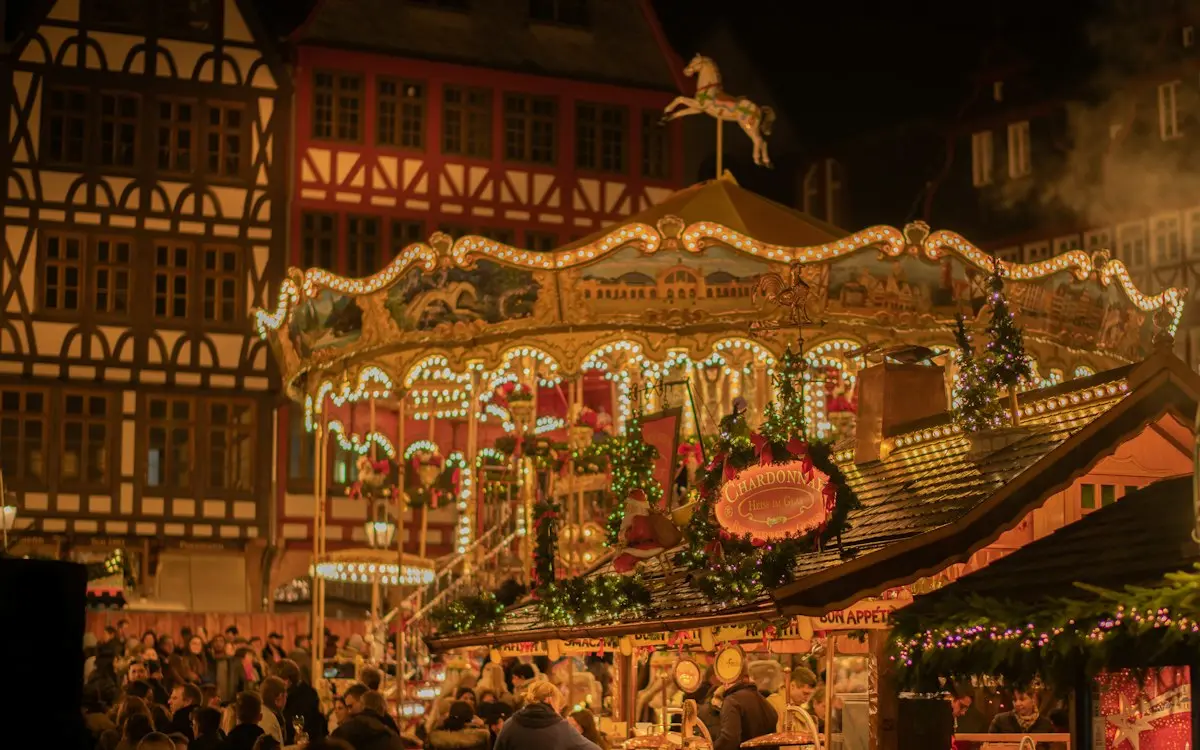
If you live in Germany, the Christmas market season is one of the few things everyone agrees on. Colleagues meet for a Glühwein after work, neighbours queue for roasted almonds, and the first weekend of Advent suddenly fills every town square. This guide covers the best Christmas markets in Germany in 2026 from the point of view of someone who lives here: which ones are worth a trip, when they open, what they cost and how to avoid the worst crowds.
Dates below were checked on official city or organiser pages in October 2026. Where I could not find an official 2026 date, I say so and show the 2025 dates, clearly labelled. Always check the organiser's site before you travel, because opening hours can change.
Christmas markets in Germany 2026: quick facts
- Season: most big markets open between about 16 and 27 November 2026 and close on 23 or 24 December. Some in Berlin and Cologne run into January.
- Mug deposit (Pfand): hot drinks usually come in a mug that carries a deposit. You get the money back when you return the mug to any stall of the same market. Amounts vary by market and stall.
- Cash or card: many stalls now take cards, but small stalls still prefer cash and card readers fail in the cold. Bring coins and small notes.
- Typical prices: press reports from 2025 put a cup of Glühwein at around 3.50 to 4.50 euros in many smaller cities, and 5 to 6 euros in Munich and Berlin, without deposit. Expect similar or slightly higher in 2026.
- Entry: free at almost every market. The WeihnachtsZauber in Berlin charges a small fee.
- Best time to go: weekdays, early afternoon.
Which are the best Christmas markets in Germany?
There is no single answer, but a handful come up again and again: Nuremberg for tradition, Dresden for age, Cologne for choice, Munich for the city centre setting and Rothenburg for a medieval backdrop. Here they are one by one.
Nuremberg Christkindlesmarkt
The most famous market in the country, held on the Hauptmarkt in front of the Frauenkirche. The Christkind, a young person in a golden robe, opens it from a church balcony. Look for the Zwetschgenmännle, little figures made of dried plums, and the Nuremberg Rostbratwürste.
2026: 27 November to 24 December, opening ceremony on 27 November at 17:30, open daily 10:00 to 21:00 (source: christkindlesmarkt.de). I did not find an entry fee or mug deposit stated on the official page. Entry to a German street market is normally free.
Dresden Striezelmarkt
Dresden's Striezelmarkt on the Altmarkt is one of the oldest in Germany and carries the number 592 in 2026. It is named after the Striezel, the old local word for Stollen. The Stollenfest, where a giant Stollen is paraded through the city, is a highlight.
2026: 25 November to 24 December on the Altmarkt, daily 10:00 to 21:00, with an earlier close on 24 December (source: the City of Dresden's 2026 stallholder notice on dresden.de, as the main event pages were not reachable when I checked). I could not confirm the exact Stollenfest time or an entry fee, so check the official site.
Cologne: several markets, not one
Cologne is the best city if you like to compare. There are markets in the Altstadt, at Neumarkt, on Rudolfplatz, by the harbour and in front of the cathedral, and each has its own mood.
- Cathedral market (Roncalliplatz): 16 November to 23 December 2026, Sunday to Wednesday 11:00 to 21:00, Thursday and Friday 11:00 to 22:00, Saturday 10:00 to 22:00, closed on Totensonntag (22 November). Source: koeln.de.
- Neumarkt (Markt der Engel): 16 November to 23 December 2026, free entry. Source: koeln.de.
- Heinzels Wintermärchen in the Altstadt: reported as 23 November 2026 to 10 January 2027. Source: koeln.de.
- Harbour market (Rheinauhafen): listed as 13 November 2026 to 3 January 2027, on koeln.de.
These come from koeln.de, a city information portal, not from each organiser, so confirm times on the market's own site.
Munich Christkindlmarkt at Marienplatz
Munich's city-run market sits under the Neues Rathaus. The tree is tall, the Advent singing from the Rathaus balcony is a nice touch, and the surrounding streets (Kaufingerstraße, Viktualienmarkt) have more stalls. It is also the market where prices run highest.
2026: 20 November to 24 December. According to muenchen.de, it starts on the Friday before Totensonntag, so it is longer than before. The page did not list opening hours I could confirm, so check the market's own website. Moving to Bavaria? See our guide to moving to Munich.
Stuttgart Weihnachtsmarkt
One of the largest in Germany, spread across the old town between the Schlossplatz and the Marktplatz. It is a good all-rounder with many food stalls and a lot of handicrafts.
2026: 25 November to 23 December. Opening hours are Sunday to Thursday 11:00 to 21:00 and Friday and Saturday 11:00 to 22:00. Stalls open at 17:00 on 25 November, with the opening ceremony at 18:00 in the courtyard of the Altes Schloss (source: stuttgarter-weihnachtsmarkt.de).
Frankfurt Weihnachtsmarkt
The Frankfurt market stretches from the Römerberg through to Paulsplatz and the Hauptwache. It is easy to reach from the main station and works well for an after-work visit. See our guide to moving to Frankfurt if you are new to the city.
2026: I could not open an official Frankfurt page with 2026 dates. A third-party festival calendar lists 23 November to 22 December 2026, but I have not verified it. The market usually opens in late November; check the official site.
Aachen Weihnachtsmarkt
Aachen's market is set around the cathedral and the town hall, close to the Belgian and Dutch borders, and is famous for Aachener Printen, a spiced gingerbread.
2026: 20 November to 23 December, daily 11:00 to 21:00. Exceptions are 22 November (18:00 to 21:00), 12 December (11:00 to 22:00) and 23 December (11:00 to 20:00). The page did not mention an entry fee, which suggests it is free (source: aachenweihnachtsmarkt.de).
Rothenburg ob der Tauber
The Reiterlesmarkt in this walled medieval town is smaller than the big city markets, which is part of the point. It works best as a day trip or an overnight stay once the day visitors have left.
2026: 20 November to 23 December (source: rothenburg.de). The page did not list stall hours, so check the tourist office for times. Entry is usually free.
What are the best Berlin Christmas markets in 2026?
Berlin has dozens of markets, each with a different crowd. If you live in the city, our guide to moving to Berlin covers neighbourhoods and getting around. For Berlin Christmas markets in 2026, these are the ones I would start with.
- WeihnachtsZauber Gendarmenmarkt: 23 November to 31 December 2026. Open Sunday to Thursday 11:00 to 22:00, Friday and Saturday 11:00 to 23:00, and 12:00 to 18:00 on Christmas Eve. This one charges entry: 2 euros, free for under 12s. Entry is free for everyone Monday to Friday from 11:00 to 14:00, except on 24, 25, 26 and 31 December (source: visitberlin.de).
- Schloss Charlottenburg: 23 November to 27 December 2026 (source: berlin.de). Opening hours were not listed. Known for its international stalls in front of the palace.
- Spandau old town: 23 November to 22 December 2026 (source: berlin.de). One of the larger markets in the city, with hours not listed.
- Lucia Weihnachtsmarkt, Kulturbrauerei: 23 November to 22 December 2026 (source: berlin.de), with a Scandinavian theme. Hours not listed.
- Rotes Rathaus: 23 November 2026 to 3 January 2027 (source: berlin.de).
berlin.de lists the Charlottenburg, Lucia, Spandau and Rotes Rathaus markets on its free admission page, so only the Gendarmenmarkt asks for a ticket. Hours were not on that page, so check each market's site. If you want a different Berlin outing, see our post on exploring Berlin by boat for warmer months.
What should you eat and drink?
You can build a full meal from a market. Our guide to German food culture explains the wider context. At the stalls, try:
- Glühwein: hot spiced red wine, the default drink. White versions exist. Kinderpunsch is the alcohol-free fruit option.
- Feuerzangenbowle: mulled wine with a rum-soaked sugar cone set on fire above the pot.
- Bratwurst: grilled sausage in a roll. In Nuremberg, the small Rostbratwürste are the local standard.
- Reibekuchen or Kartoffelpuffer: fried potato pancakes, often with apple sauce.
- Lebkuchen: soft spiced gingerbread, most associated with Nuremberg.
- Stollen: dense fruit bread dusted with sugar, strongly tied to Dresden.
- Gebrannte Mandeln: sugar-roasted almonds. Buy a small bag; they are heavy.
How does the mug deposit work?
Most stalls serve hot drinks in a ceramic mug that has a deposit on top of the drink price. You pay the drink plus the deposit. When you return the mug to a stall of the same market, you get the deposit back. Icy cobbles around the stalls are a classic winter mishap, so make sure your cover is in order; if you are still choosing a policy, our comparison of the best private health insurance options sets them out.
Some markets use a different mug design every year, and many visitors keep it as a souvenir and lose the deposit on purpose. Keep the token or receipt if you get one. Some stalls let you return a mug at any stall, others only at the one that sold it, so ask when you buy. The amount differs by market, so look at the price board.
How do you avoid the crowds?
- Go on a weekday between about 12:00 and 16:00. Evenings and Saturdays are the busiest.
- Avoid the first Advent weekend and the last weekend before Christmas.
- Choose the smaller markets in the same city. Cologne and Berlin have enough of them to make this easy.
- Leave the central square. The side streets and smaller satellite markets are calmer and often cheaper.
- Look for free-entry windows where there is an entry fee, such as the Gendarmenmarkt on weekday late mornings.
How do you get to Christmas markets by train?
The Deutschlandticket covers local and regional transport nationwide, so a day trip by regional train (RE, RB) and S-Bahn costs nothing extra if you already have one. It does not cover ICE or IC long-distance trains, so check the connection before you go. The price of the ticket and what it replaces in your budget is in our cost of living guide.
Some day trips that work by regional train:
- From Berlin: Spandau, Potsdam and Brandenburg an der Havel.
- From Cologne: Aachen and Bonn by regional train.
- From Nuremberg: Rothenburg ob der Tauber (check the connection in the DB Navigator app).
- From Munich: Augsburg and Regensburg.
Hamburg also has several markets, including the one in front of the Rathaus. I have not collected 2026 dates, so check the city's site. Our guide to moving to Hamburg covers the rest of the city.
Use the DB Navigator app for connections, and avoid driving into city centres, as parking is scarce and often expensive on weekends.
Are Christmas markets good for kids and wheelchair users?
Many have a children's area with a carousel, small rides and craft workshops. The Munich market has a children's workshop in the town hall, for example. Strollers work on weekdays but can be hard to use in the evening crush.
For wheelchair users, cobblestones can be a problem in old towns such as Rothenburg. Check each organiser's site for accessible toilets and parking, as I did not verify details for individual markets.
How do you avoid pickpockets?
Crowded stalls attract pickpockets. A few habits help:
- Keep your phone and wallet in inside pockets, not in a back pocket.
- Wear your bag in front of you in a crush.
- Be careful with your phone when you pay with it at a busy stall.
- Keep your bank card separate from your cash.
FAQ
When do Christmas markets open in 2026?
Most large ones open between 16 and 27 November 2026. The Cologne cathedral market opens on 16 November, Munich on 20 November, Berlin's Gendarmenmarkt on 23 November, and Nuremberg, Dresden and Stuttgart between 25 and 27 November.
What is the best Christmas market in Germany?
Nuremberg is the best known and Dresden the oldest, but the best one for you depends on what you want. Cologne offers variety, Munich a central location and Rothenburg a medieval setting.
Do I have to pay to enter a Christmas market?
Almost never. The exception I found is the Berlin WeihnachtsZauber at Gendarmenmarkt, which charges 2 euros, with free entry on weekdays from 11:00 to 14:00 and for children under 12.
How does the mug deposit work?
You pay a deposit on top of the drink price and get it back when you return the mug at the market. The amount varies by stall, so read the price board.
Can I use the Deutschlandticket to get to a Christmas market?
Yes, on local and regional trains, S-Bahn, U-Bahn and buses. It does not cover ICE and IC trains.
Should I bring cash?
Yes. Many stalls accept cards, but small ones still prefer cash and card readers can fail in cold weather.
Planning a winter in Germany? Our cost of living guide helps you plan what a month in your city really costs.