Taxes in Germany for Expats
Taxes in Germany explained in plain English: income tax rates, tax classes, filing your Steuererklärung, deductions, and how to get a refund.
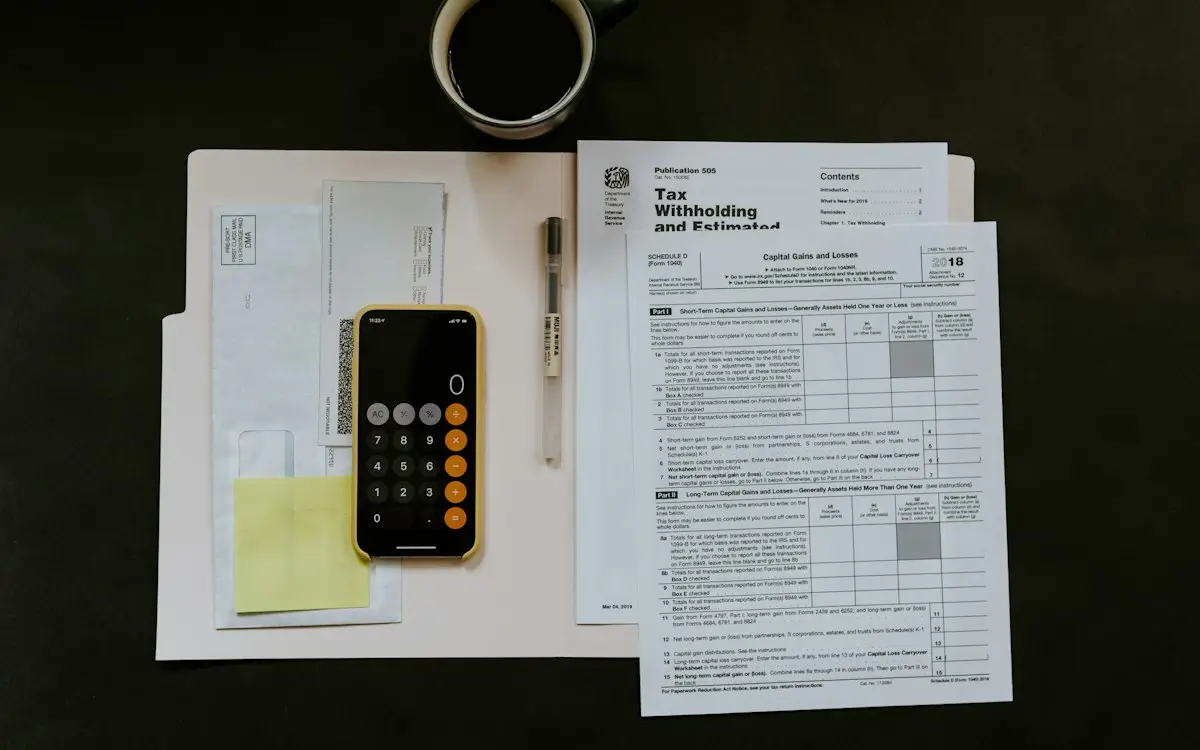
Taxes in Germany are the system by which Germany funds its public services, healthcare, schools, infrastructure, and social security. As an expat living and working in Germany, you are subject to German taxation from the first day you are resident here. Understanding how the system works is essential for managing your finances and making sure you're not overpaying, which many expats unknowingly do.
Parents should also look at Kindergeld, and buyers at the mortgage guide for expats.
The good news: Germany has a well-structured, predictable tax system, and many expats are entitled to tax refunds they never claim. This guide explains the system in plain English.
How German taxes work, the basics
Germany operates a pay-as-you-earn (PAYE) system for employees, meaning your employer deducts income tax from your salary every month and pays it to the tax office (Finanzamt) on your behalf. You may then file an annual tax return to reclaim overpaid tax or report additional income.
The main taxes expats encounter:
- Einkommensteuer: Income tax on your salary and other income. Deducted monthly by your employer.
- Solidaritätszuschlag (Soli): Solidarity surcharge, originally to fund German reunification. Since 2021, only applies to higher earners (single person with income tax above €18,130/year). Most employees no longer pay it.
- Kirchensteuer: Church tax (8–9% of your income tax). Only applies if you are registered as a member of a recognized church in Germany. You can opt out by declaring no religion at your Anmeldung or by formally leaving your church (Kirchenaustritt).
- Sozialversicherungsbeiträge: Social insurance contributions: health insurance (~7.3%), pension (~9.3%), unemployment insurance (~1.3%), long-term care insurance (~1.7–2.3%). These are split between employee and employer.
Important: When your employer shows you a salary breakdown, you will see Brutto (gross) and Netto (net). The gap includes income tax, solidarity surcharge, church tax (if applicable), and all social insurance contributions. Both employer and employee pay into social insurance, the employer's contribution is on top of your gross and not visible in your payslip.
Income tax (Einkommensteuer)
Germany has a progressive tax system: the more you earn, the higher the rate you pay on the marginal income above each threshold. This is similar to the UK, US, and most European countries.
Income tax rates 2026 (approximate)
| Annual taxable income (single) | Marginal tax rate |
|---|---|
| Up to €11,784 | 0% (personal allowance, Grundfreibetrag) |
| €11,785 – €17,005 | 14% (rising progressively) |
| €17,006 – €66,760 | 24–42% (rising progressively) |
| €66,761 – €277,825 | 42% (Spitzensteuersatz) |
| Over €277,826 | 45% (Reichensteuersatz) |
The rates above are marginal rates, they apply only to income within that bracket, not to your total income. Your effective tax rate (what you actually pay as a percentage of total income) is always lower than the marginal rate. For example, on €60,000 gross, the effective income tax rate is roughly 20–22%.
What does this mean for take-home pay?
| Gross salary | Approx. net (Steuerklasse I, no church tax) | Effective income tax rate |
|---|---|---|
| €35,000 | ~€2,000/month | ~12% |
| €50,000 | ~€2,600/month | ~17% |
| €70,000 | ~€3,400/month | ~22% |
| €90,000 | ~€4,150/month | ~26% |
| €120,000 | ~€5,300/month | ~30% |
These are approximate figures including social insurance contributions. Actual take-home pay varies based on your tax class, health insurance choice, church tax, and personal deductions.
Tax classes (Steuerklassen)
Germany assigns every employed person a Steuerklasse (tax class), which determines how much income tax is withheld from your monthly payslip. Your tax class doesn't change how much tax you ultimately owe, it affects only the monthly withholding. The annual tax return reconciles the difference.
| Steuerklasse | Who it applies to | Effect on monthly withholding |
|---|---|---|
| I | Single, divorced, widowed, separated. The default for most single expats. | Standard withholding |
| II | Single parents with child living in household | Slightly lower withholding (additional allowance) |
| III | Married, the higher-earning spouse (paired with Klasse V) | Lowest withholding, best cash flow |
| IV | Married, both earning similarly (default for married couples) | Similar to Klasse I |
| V | Married, the lower-earning spouse (paired with Klasse III) | Highest withholding |
| VI | Second job (any additional employment) | Maximum withholding, no allowances applied |
For most single expats: You will be in Steuerklasse I. This is the standard class and applies automatically. If you are married and both partners work, you can choose between IV/IV (equal split) or III/V (unequal split that optimizes monthly cash flow). The III/V combination increases monthly take-home for the higher earner but requires a mandatory tax return.
Common tax deductions for expats
Germany allows a wide range of deductions (Werbungskosten, Sonderausgaben, außergewöhnliche Belastungen) that can significantly reduce your taxable income. Many expats leave money on the table by not claiming deductions they're entitled to.
Werbungskosten, job-related expenses
Germany automatically grants a flat-rate deduction of €1,230/year (2026) for work-related expenses. If your actual costs exceed this, you can claim the higher amount:
- Commuting costs: €0.30/km one-way for the distance between home and workplace (Entfernungspauschale). Applies regardless of how you commute.
- Home office: €6/day for days worked from home, up to €1,260/year (max 210 days). No dedicated room required since 2023.
- Work equipment: Computer, desk, chair, and other equipment used for work (if bought yourself). Items under €800 net can be fully deducted in the year of purchase.
- Professional development: Courses, certifications, professional books, and subscriptions related to your job.
- Job search costs: Application materials, travel to interviews.
- Double household: If you maintain a second residence because your job is far from your family home (Doppelte Haushaltsführung), significant deductions available.
Sonderausgaben, special expenses
- Church tax: If you paid Kirchensteuer, it is deductible from your taxable income.
- Charitable donations: Donations to German-registered charities up to 20% of total income.
- Pension contributions: Additional voluntary pension contributions (Riester-Rente, Rürup-Rente) may be deductible. How the system works is explained in pension in Germany for expats.
- Health insurance top-ups: Additional private health insurance contributions above the mandatory base level.
Außergewöhnliche Belastungen, extraordinary expenses
Significant medical expenses not covered by your health insurance can be deducted above a reasonable burden threshold (zumutbare Belastung). This typically applies to large medical bills, disability-related expenses, or nursing home costs for dependents.
Filing your German tax return (Steuererklärung)
This section is the short version. For the full walkthrough, see our tax return in Germany guide (ELSTER, step by step). To estimate what is withheld from your pay before you file, use the net salary calculator.
The German tax year runs January–December. Tax returns can be filed from February 1 of the following year. The deadline for self-filed returns is July 31. If you use a Steuerberater (tax advisor), the deadline extends to February 28 of the year after that.
Who must file a tax return?
You are required to file if:
- You are self-employed or a freelancer
- You have income from multiple employers in the same year
- You and your spouse use tax class III/V combination
- You receive certain social benefits (Elterngeld, Kurzarbeitergeld, etc.)
- You have taxable income from abroad
- You have capital gains or rental income above €801 (savings allowance)
Who should file even if not required?
Most employees in Steuerklasse I are not required to file, but most should, because it usually results in a refund. The average German tax refund is over €1,000. Common reasons for refunds:
- Job-related expenses above the €1,230 flat rate
- Home office days
- Started or left Germany mid-year (the personal allowance is not pro-rated in monthly withholding)
- Had periods of unemployment or parental leave
- Significant professional development or equipment costs
How to file your tax return
- ELSTER (elster.de): The official free German tax software. Complex to navigate but free and comprehensive. Available in German only.
- Taxfix, Wundertax, Smartsteuer: Simplified online tools (in English or with English-language support). Suitable for employees with standard situations. Cost €30–50.
- Steuerberater (tax advisor): A licensed German tax advisor. Essential for complex situations (freelancers, foreign income, expat deductions, company cars). Cost €200–500 for standard returns.
- Lohnsteuerhilfeverein: Non-profit tax assistance clubs. Lower cost than Steuerberater, but limited to employed persons only (cannot help freelancers). Worth considering if your situation is straightforward.
Getting a German tax refund
The German tax authority (Finanzamt) typically processes returns within 4–12 weeks. Refunds are paid directly to your German bank account (IBAN required). You'll receive a Steuerbescheid (tax assessment notice) by post confirming the calculation.
If you disagree with the assessment, you have one month to file a formal objection (Einspruch). A Steuerberater can help with this.
Tip: If you arrived in Germany partway through the year (e.g., joined in August), you are very likely owed a refund. Your employer withheld tax as if you would earn at your salary for the full year, but your income-year was shorter, meaning the withholding was calculated incorrectly. Filing a return for the year you arrived almost always results in a meaningful refund.
Taxes for freelancers and self-employed expats
If you are self-employed (freiberuflich) or operate a trade (gewerblich) in Germany, your tax situation is more complex. You are responsible for calculating and paying your own taxes, and you must file a tax return every year.
Key obligations for freelancers
- Umsatzsteuer (VAT/Mehrwertsteuer): Standard rate is 19% (7% for certain services). As a freelancer, you typically charge VAT on your invoices and pay the net to the Finanzamt. New freelancers with low turnover (under €22,000 in year 1, under €50,000 in year 2) can use the Kleinunternehmerregelung (small business exemption) to simplify this.
- Einkommensteuer prepayments (Vorauszahlungen): The Finanzamt will request quarterly income tax prepayments based on your previous year's income. This is common for freelancers.
- Gewerbesteuer (trade tax): Applies to Gewerbetreibende (traders) but not to Freiberufler (freelancers in recognized professions like IT, consulting, creative). Whether you qualify as Freiberufler significantly affects your tax obligations.
- Annual Steuererklärung is mandatory: All self-employed persons must file a full tax return including Anlage S (freelance income) or Anlage G (trade income).
Tax for freelancers is complex enough that a Steuerberater is strongly recommended, especially in the first year. Find a tax advisor in Germany who speaks English →
Setting up as a freelancer or business in Germany →
Double taxation agreements (Doppelbesteuerungsabkommen)
Germany has double taxation agreements (DTAs) with over 90 countries, including the UK, US, Australia, India, and most EU nations. These agreements prevent you from being taxed on the same income in both Germany and your home country.
Relevant scenarios for expats:
- Remote work for a foreign employer: If you work for a non-German company while living in Germany, the DTA determines where you pay tax. In most cases, if you are resident in Germany, you pay German tax on your income (not UK, US, etc. tax).
- Investment income from abroad: Dividends, interest, and capital gains from foreign investments may be partially taxable in Germany. The DTA sets limits on withholding taxes.
- Pension income from abroad: Rules vary significantly by country and treaty. A Steuerberater with international expertise is advisable.
- Part-year residency: If you moved to Germany mid-year, you may have tax obligations in both countries for that year. Check your home country's rules and the relevant DTA.
Steuer-ID and Steuernummer, what's the difference?
| Steuer-ID (Steueridentifikationsnummer) | Steuernummer | |
|---|---|---|
| What it is | Permanent 11-digit ID number for every German resident | Filing reference number assigned by your local Finanzamt |
| How you get it | Automatically sent by post 2–4 weeks after Anmeldung | Assigned when you file your first tax return |
| Does it change? | Never, it's yours for life | Changes if you move to a different Finanzamt district |
| Give to employer? | Yes, required for payroll | Not typically needed by employer |
| Put on invoices? | Not required | Yes, freelancers must include it on all invoices |
If you never received your Steuer-ID (or lost it), you can request it online at the Bundeszentralamt für Steuern (BZSt) website. You'll need your registered German address. It takes 4–6 weeks to arrive by post.
Tax checklist for expats in Germany
When you arrive
- Complete Anmeldung, your Steuer-ID will arrive by post automatically
- Declare no church membership if applicable (avoids Kirchensteuer)
- Give your Steuer-ID to your employer as soon as you receive it
- Keep all payslips and year-end Lohnsteuerbescheinigung (annual tax certificate from employer)
During the year
- Keep receipts for job-related expenses (home office, equipment, professional development)
- Track your home office days
- Record commuting distances
- Note any work-related travel, training, or equipment purchases
Tax return season (February–July)
- Gather all documents: Lohnsteuerbescheinigung, bank statements, receipts
- File using ELSTER (free), Taxfix/Wundertax (simple), or a Steuerberater (complex situations)
- If you arrived mid-year, always file, you are almost certainly owed a refund
- If freelance, ensure prepayments are on track with the Finanzamt
FAQ
Do I have to pay German tax if I work remotely for a foreign company?
What is the deadline for filing a German tax return?
How much do Germans actually pay in total taxes and contributions?
What is the Solidaritätszuschlag (Soli) and do I pay it?
Should I declare my foreign bank accounts or investments to Germany?
Is it worth hiring a German tax advisor (Steuerberater)?
Still not sure which insurance fits you?
Independent, English-speaking consultants compare the whole market for you. Free, no commitment, honest about when not to switch.
Partner disclosure: we may receive a referral fee from MyHealthcareBroker when you book a consultation. It is free for you and you are under no obligation.