Buying a Bicycle in Germany: Rules, Locks, Insurance
Buying a bicycle in Germany made simple: how to register, lock and insure a bike, from city bikes to e-bikes, plus second-hand markets and legal rules.
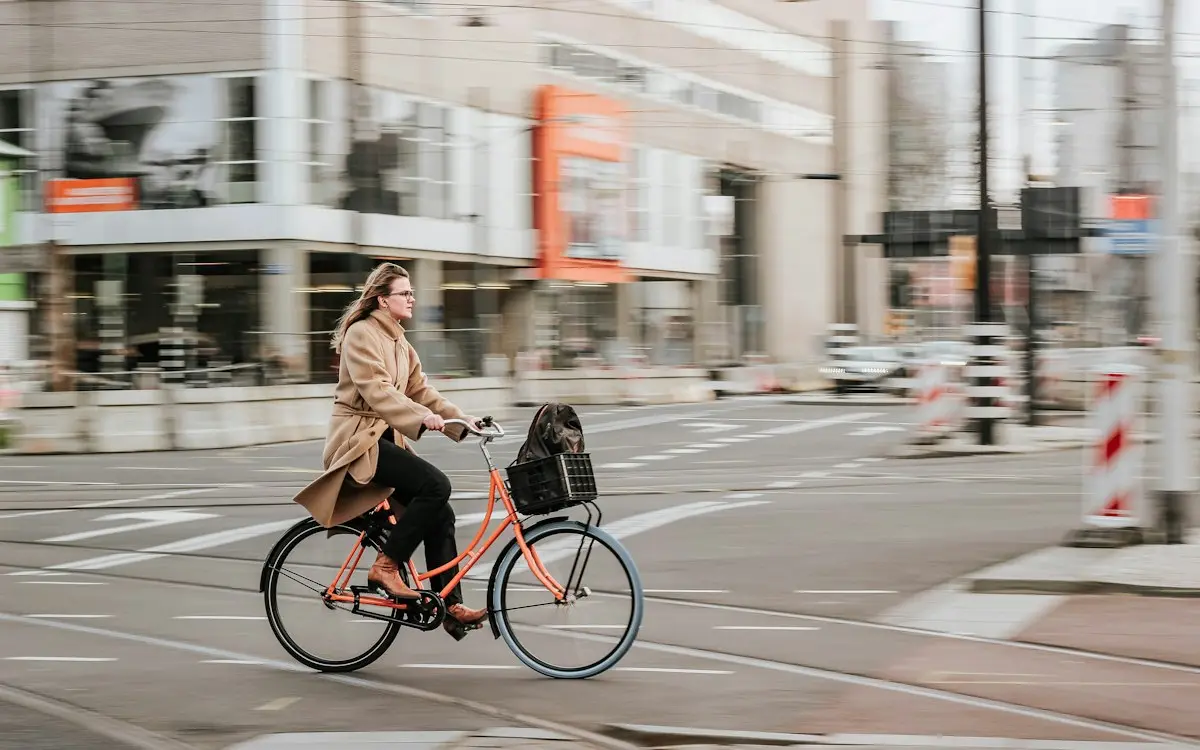
Germany takes cycling seriously. The infrastructure is excellent, the culture is deeply bike-friendly, and in most German cities, a bicycle is the fastest, cheapest, and most practical way to get around. For newly arrived expats, buying a bike is often one of the first and best decisions you can make. This guide covers everything from which bike to buy and where to find it, to the legal requirements, theft prevention, and insurance.
Why cycling in Germany is excellent
Germany has invested heavily in cycling infrastructure for decades. Most cities have dedicated bike lanes (Radwege or Radfahrstreifen) on major streets, separate traffic lights for cyclists, and well-signposted routes through the city and into the countryside. In cities like Berlin, Hamburg, Munich, Frankfurt, and Stuttgart, you can cross the city almost entirely on protected infrastructure.
Cycling is not just tolerated in Germany; it is genuinely part of everyday life. Commuters, students, elderly residents, families with cargo bikes: cycling is for everyone, not just sport enthusiasts. You will notice quickly that Germans cycle in normal clothes, at a relaxed pace, carrying groceries or children. There is no pressure to wear lycra or go fast.
Practically speaking, a bicycle eliminates the need to buy a monthly public transport pass for shorter distances, saves time in dense urban traffic, and costs almost nothing to run. For expats who are still finding their feet, a bike gives you immediate independence and makes the city feel navigable far faster than any app.
Types of bikes
City / trekking bike (most practical)
The city bike (Stadtrad or Cityrad) or trekking bike is the most versatile and practical choice for most expats. It has an upright riding position, mudguards, integrated lights, and often a rack for bags or panniers. Trekking bikes are slightly more robust with wider tyres, suited to both city streets and light gravel paths. This is the German default for everyday riding and for good reason: it is comfortable, low-maintenance, and works in all conditions.
Road bike
Road bikes (Rennräder) are fast and light, designed for long distances on tarmac. They are popular among sport cyclists but less practical as a daily commuter: narrow tyres, no mudguards, no rack, and a crouched riding position. Good if cycling is a sport for you; less ideal as a car replacement.
E-bike / Pedelec
Electric bikes have exploded in popularity across Germany. A Pedelec (the most common type) has a motor that assists your pedalling up to 25 km/h; after that you're on your own. They are especially popular with commuters who want to arrive at work without sweating, and with people who live in hillier areas. E-bikes are heavier and more expensive than standard bikes but the difference in day-to-day usability, especially for longer commutes, is significant. See the e-bikes section below for the legal distinctions between Pedelec and speed pedelec.
Cargo bike (Lastenrad)
Cargo bikes are increasingly common in Germany, particularly among families. They can carry children, groceries, or large loads and are a genuine car replacement for many households. Some German cities offer subsidised cargo bike rental schemes. High initial cost (€2,000–5,000+) but low running costs.
Where to buy: new bikes
Local bike shops (Fahrradläden)
Every German city has independent bike shops (Fahrradläden) and larger chains. Buying from a local shop gives you the advantage of expert advice, professional assembly, and a direct relationship for servicing and repairs. Staff in most shops speak enough English to help you find the right bike. Good chains include Stadler (large German chain with a wide range) and regional dealers tied to brands like Trek, Canyon, or Cube.
Online retailers
- Bike24 (bike24.com): one of Germany's largest online bike retailers. Wide range from entry-level to premium, with good stock availability and reliable shipping to German addresses.
- Hibike (hibike.de): another major German online retailer, strong on city and trekking bikes.
- Rose Bikes (rosebikes.com): German brand with a strong direct-to-consumer model. Good value, English-language site, and a showroom in Bochum if you want to see bikes in person.
- Canyon (canyon.com): premium direct-to-consumer brand, excellent quality-to-price ratio for road and mountain bikes.
Buying online is cheaper than buying in a shop, but you will need to do some final assembly yourself (or pay a local shop to do it), and returns for large items can be complicated. For a first bike in Germany, visiting a local shop is often worth the small price premium.
Large sporting goods retailers
Decathlon is reliable for budget entry-level bikes and is good if you need something functional quickly without much deliberation. Their own-brand bikes (B'Twin) are solid at the lower price points. Intersport is another option with physical stores in most German cities.
Where to buy: second-hand bikes
Kleinanzeigen
Kleinanzeigen (kleinanzeigen.de, formerly eBay Kleinanzeigen) is Germany's dominant classifieds platform, equivalent to Craigslist. It is the best place to find second-hand bikes at every price point. Filter by your city, set a price range, and expect a wide selection. Meet sellers in person, test the bike, and always ask for the original receipt and serial number. Never transfer money in advance; always pay cash on collection.
Facebook Marketplace
Facebook Marketplace has grown into a solid secondary option, particularly in larger cities. Search for "[City] Fahrrad" or "bicycle [City]". Many expat groups also have dedicated buy/sell sections where second-hand bikes are listed regularly.
Flea markets (Flohmarkt)
German flea markets (Flohmärkte) often have bikes for sale, particularly larger outdoor markets. Prices can be very low, but provenance is even harder to verify than with private sellers. Be especially cautious about suspiciously cheap bikes at flea markets (see the safety section below).
Bike auctions (Fundbüro)
German police regularly auction unclaimed lost property, including bikes, through their Fundbüro (lost property office). These are legitimate and can offer good value; search "[your city] Fundbüro Fahrrad" for details.
Buying second-hand safely
Bike theft is very common in Germany. Berlin and Hamburg in particular have high theft rates, which means a significant portion of second-hand bikes on informal markets may be stolen. Buying a stolen bike is illegal regardless of whether you knew it was stolen, and you will lose the bike if police recover it.
How to protect yourself:
- Ask for the original receipt. Any legitimate seller of a quality bike should have the purchase receipt. If they don't, ask why. No receipt for a bike over €300 is a yellow flag.
- Check the serial number. Every bike has a serial number, usually stamped on the underside of the bottom bracket (the metal part where the pedal cranks connect to the frame). Write it down and check it on gestohlene-fahrraeder.de, Germany's stolen bike database, before completing the purchase. Also check the European database at fahrradpass.de and bike-index.org.
- Test ride the bike. Meet in daylight, in a public place. A seller who won't let you test ride or who is evasive about basic questions should not get your money.
- Be suspicious of very low prices. A well-known brand bike in good condition for €80 is almost certainly stolen. Prices well below market value are a warning sign, not a bargain.
- Ask to meet at their home address. Legitimate private sellers are generally comfortable meeting at or near their home. Insistence on meeting at a train station or public place is not conclusive, but worth noting alongside other factors.
Price ranges
What you should expect to pay for a new bike in Germany:
- Entry-level city bike: €250–400 (Decathlon B'Twin, basic Cube or Pegasus). Functional but with cheaper components. Fine for occasional use or if you're testing whether you'll cycle regularly.
- Decent city / trekking bike: €400–800, the sweet spot for most people. Reliable components, quality brakes, integrated lights, and a frame that will last years. Brands like Cube, Pegasus, Kalkhoff, or Trek at this level are solid choices.
- Quality trekking / commuter bike: €800–1,500. Belt drive, hydraulic disc brakes, premium components. Worth considering if cycling will be your main transport.
- Entry e-bike / Pedelec: €1,500–2,500. Covers most reputable brands at an acceptable specification level.
- Good e-bike: €2,500–3,500. Brands like Bosch-powered models from Cube, Trek, Kalkhoff, or Riese & Müller at this level are well-built and reliable for daily commuting.
- Premium e-bike / cargo bike: €3,500+. High-specification pedelecs and cargo bikes. Riese & Müller cargo bikes can reach €7,000–8,000.
For second-hand bikes, expect to pay roughly 40–60% of the new price for a bike in good condition that is 2–4 years old.
Legal requirements for cycling in Germany
German law (StVZO, Straßenverkehrs-Zulassungs-Ordnung) sets out specific requirements for bikes used on public roads. Many of these are already factory-fitted on new bikes sold in Germany, but if you buy second-hand or import a bike, it is worth checking:
Lights: mandatory
Your bike must have a white front light and a red rear light when riding in the dark or poor visibility conditions. Battery and rechargeable lights are allowed, and they can be removable, but you must fit them whenever it is dusk or dark. Handheld lights do not count. Dynamo-powered lights are the German standard on city bikes and are strongly recommended, as you cannot forget to charge them.
Reflectors: mandatory
German law requires front and rear reflectors, and reflectors on the pedals (front and rear). Many bikes also have spoke reflectors or reflective tyre sidewalls. Again, these are standard on new German bikes.
Bell: mandatory
A working bell (Klingel) is a legal requirement on all bikes in Germany. Use it: it is your primary way of alerting pedestrians on shared paths. Most people find German cycling culture to be respectful, but pedestrians on bike paths who don't yield to a bell ring can cause genuine accidents.
Helmet: not required by law for adults
There is no legal helmet requirement for adults cycling in Germany. Many Germans cycle without helmets, particularly in cities at low speeds. That said, wearing a helmet is strongly recommended, especially for faster riding, e-bikes, or routes with significant traffic. Children under a certain age are not legally required to wear helmets either, but most parents choose to do so. If you are involved in an accident and were not wearing a helmet, some insurers may reduce compensation under contributory negligence principles; check your policy.
Bike registration
There is no mandatory state registration system for bicycles in Germany. Unlike cars, you do not need a number plate or official registration document. Voluntary registration is strongly recommended for theft recovery purposes.
ADFC registration
The ADFC (Allgemeiner Deutscher Fahrrad-Club, Germany's main cycling advocacy club) operates a voluntary bike registration scheme called Fahrradpass. You register your bike's frame serial number, description, and photo in the ADFC database. If your bike is stolen and later recovered by police, they can trace it back to you. Registration is free for ADFC members and available via the ADFC website.
Record your serial number
Regardless of any registration scheme, always note down your bike's serial number (found on the underside of the bottom bracket) and keep a photo of the bike with the serial number visible. Without this, recovering a stolen bike is nearly impossible. Some people also record this with their home insurance provider when taking out bicycle insurance.
Theft prevention
Bike theft is one of the most common property crimes in Germany. In Berlin alone, more than 20,000 bikes are reported stolen each year, and many more go unreported. Taking theft seriously from day one will save you significant money and frustration.
Use two locks
The standard advice from German cycling experts and insurers is to use two locks of different types. A U-lock (Bügelschloss) combined with a heavy chain lock or a folding lock (Faltschloss) provides much stronger protection than either lock alone. Thieves carry specific tools: a bolt cutter effective against chain locks may not work on a good U-lock, and vice versa.
Budget properly for locks
Spend at least 10% of your bike's value on locks, and ideally more. For a €600 bike, that means €60 minimum, ideally €80–100. Recommended brands: Kryptonite, ABUS (a German brand, widely respected), and Hiplok. Avoid cheap combination locks or cable locks for anything you care about; cable locks can be cut in seconds.
Lock correctly
Always lock your frame to a fixed object, not just the wheel. A wheel locked to a post is trivially easy to steal: the thief just removes the wheel and takes the frame. The U-lock should go through the frame, the rear wheel, and around a fixed object (bike rack, sturdy post). The second lock can secure the front wheel to the frame or the same fixed object.
Never leave your bike locked only to itself (wheel locked to frame without attachment to anything fixed). This is often called a "parking lock" and prevents the bike from rolling, but does nothing to prevent it being carried away.
Location matters
Park in well-lit, high-traffic areas where possible. Bike racks near camera-covered areas or busy entrances are better than quiet side streets. If you are leaving your bike overnight, consider bringing it indoors. Many German apartment buildings have designated bike storage rooms (Fahrradkeller) in the basement.
Bike insurance (Fahrradversicherung)
Bike theft is common enough in Germany that insurance is worth taking seriously, particularly for bikes worth more than €500.
Household insurance add-on
Many Hausratversicherung (household contents insurance) policies include basic bike theft coverage, or offer it as a low-cost add-on. This is often the simplest and cheapest route if you already have household insurance. Check the small print carefully: coverage is typically limited to a percentage of the total insured value, and many policies only cover theft when the bike is locked to a fixed object with a certified lock. Some policies exclude bikes not stored inside the property overnight.
Standalone bike insurance
A dedicated Fahrradversicherung provides more comprehensive coverage, typically all-risk theft (including from locked storage), accidental damage, vandalism, and sometimes roadside assistance. Costs vary by bike value but typically run €50–150 per year for a bike worth €500–1,500. For an e-bike worth €2,500–3,500, expect to pay €100–200 per year for good coverage.
Providers worth comparing: Wertgarantie, ADFC partner insurers (ADFC members get preferential rates), Allianz, ERGO, and specialist cycling insurers like Velocomplete.
Key things to check in any policy:
- Is the bike covered when parked outside (not just at home)?
- What lock is required? Many policies specify a minimum lock security level (e.g., VdS-certified).
- Is there a locking requirement at night? (Some policies require the bike to be inside a locked building overnight to be covered.)
- Does it cover accidental damage and not just theft?
- What is the excess (Selbstbeteiligung) per claim?
E-bikes and Pedelecs: what you need to know
Germany distinguishes between different types of electrically-assisted bikes, and the legal status matters:
Pedelec (up to 25 km/h): treated as a bicycle
A Pedelec assists your pedalling up to 25 km/h. The motor only works when you are pedalling. This is by far the most common type of e-bike sold in Germany. Legally, a Pedelec up to 25 km/h and 250W motor output is classified as a bicycle, which means:
- No driving licence required
- No registration plate required
- No insurance plate required (though insurance is still recommended)
- Can use bike lanes
- No helmet required by law (though strongly recommended at higher assisted speeds)
Speed Pedelec (up to 45 km/h): treated as a moped
A Speed Pedelec assists up to 45 km/h. This category is classified as a moped (Kleinkraftrad) in Germany, which changes the legal requirements significantly:
- Requires a moped licence (class AM, or any higher driving licence category; a standard car licence qualifies)
- Requires a registration plate (Versicherungskennzeichen, the small seasonal plate, changed annually)
- Requires third-party liability insurance (Pflichtversicherung)
- Requires a helmet (any motorcycle-approved helmet, not a cycle helmet)
- Cannot use standard bike lanes; must use the road or moped-designated lanes
Speed pedelecs are excellent for longer commutes but the regulatory overhead is real. Factor this in when considering one.
E-bikes with throttle
Some e-bikes sold outside Germany have a throttle that engages the motor without pedalling. These are not classified as Pedelecs under German law and typically require registration and insurance. Check compliance before importing or using such a bike on German roads.
Taking your bike on public transport
German public transport is generally bike-friendly, though the rules vary by network and time of day:
- Regional trains (RE, RB, S-Bahn): Bikes are allowed in designated carriages (look for the bike symbol). You need a Fahrradticket (bike ticket) in addition to your regular ticket. Costs vary, typically €3–6 per journey depending on the network. On some routes and times, bikes are not allowed (e.g., peak hours on some urban S-Bahn routes).
- U-Bahn and Tram: Bikes are allowed outside peak hours in most cities. Check the local rules; Berlin's BVG, Munich's MVV, and Hamburg's HVV all have their own policies. A Fahrradticket is usually required.
- Long-distance trains (ICE, IC, EC): Bikes are allowed on IC and EC trains in designated bike spaces, you need a reservation and a DB Fahrradkarte, which costs about €8–15 per trip depending on distance, booking date and how full the train is. Bikes are also allowed on selected ICE services, so check your connection on bahn.de. Book the bike space at the same time as your ticket; spaces are limited.
- Folding bikes: A folding bike that fits in a bag is classified as luggage in most German transport networks and travels free without a bike ticket. This is a significant practical advantage if you mix cycling with longer train journeys.
Cycling rules in Germany
German traffic law applies to cyclists just as it does to drivers. Some key rules:
- Traffic lights apply to you. Running a red light (Rotlicht) on a bike is illegal and carries a fine (€60, or €100 if the light had been red for more than a second or you endangered someone, and up to €180 if you also caused damage). Traffic police do enforce this in German cities.
- Cycling on pavements is generally illegal. Unless there is a sign explicitly allowing it (a round blue sign with a bike and a pedestrian), you must use the road or the designated bike lane. Pavement cycling that endangers pedestrians can result in a fine.
- Use the bike lane when one is present. If there is a dedicated bike lane (red surface, or a lane marked with bike symbols), you are usually required to use it rather than riding on the road. This varies slightly by lane type: some are optional, some are mandatory (Benutzungspflicht).
- Alcohol limits apply. The legal limit for cycling in Germany is 1.6 per mille blood alcohol content (BAC), higher than the 0.5 per mille limit for cars. You can still be fined or have your driving licence affected if you are caught cycling drunk above 1.6 per mille, or above 0.3 per mille if you cause an accident or show signs of impairment.
- Hand signals. You are expected to signal turns with your arm extended: left arm out for left, right arm out for right. This is a basic road safety expectation and other cyclists and drivers will appreciate it.
- Mobile phones. Holding and using a mobile phone while cycling is illegal in Germany and carries a €55 fine.
- Riding two abreast. Permitted when it does not impede traffic. On busy roads, ride single file.
ADFC: the German cycling club
The ADFC (Allgemeiner Deutscher Fahrrad-Club) is Germany's national cycling advocacy organisation with over 200,000 members. Membership costs around €50–70 per year for an individual and is genuinely worth it for regular cyclists.
What membership gets you:
- Pannenhilfe: roadside assistance for cyclists, available 24/7. If you have a breakdown (puncture, broken chain, mechanical failure) and cannot fix it yourself, you can call ADFC for help. This alone can be worth the membership fee.
- Legal protection: some membership tiers include legal advice in the event of a cycling accident.
- Bike maps: ADFC publishes detailed regional cycling maps (Radreisekarten) covering Germany at 1:150,000 scale, excellent for longer tours and route planning.
- Discounts: partner discounts at bike shops, bike insurance, and related services.
- Advocacy: your membership funds lobbying for better cycling infrastructure in Germany.
Even if you don't join, the ADFC website (adfc.de) is a useful resource for cycling maps, route planning tools, and information on local cycling initiatives in your city.
Sources
Checked on 15 October 2026. §67 StVZO, Fahrradbeleuchtung; Bußgeldkatalog-Verordnung, Anlage; Deutsche Bahn, Fahrradkarte Fernverkehr.
Still not sure which insurance fits you?
Independent, English-speaking consultants compare the whole market for you. Free, no commitment, honest about when not to switch.