White Asparagus Season in Germany: Spargelzeit Guide
When is white asparagus season in Germany? Dates, why it ends on 24 June, how to buy, peel and cook Spargel, and where to visit farms and festivals.
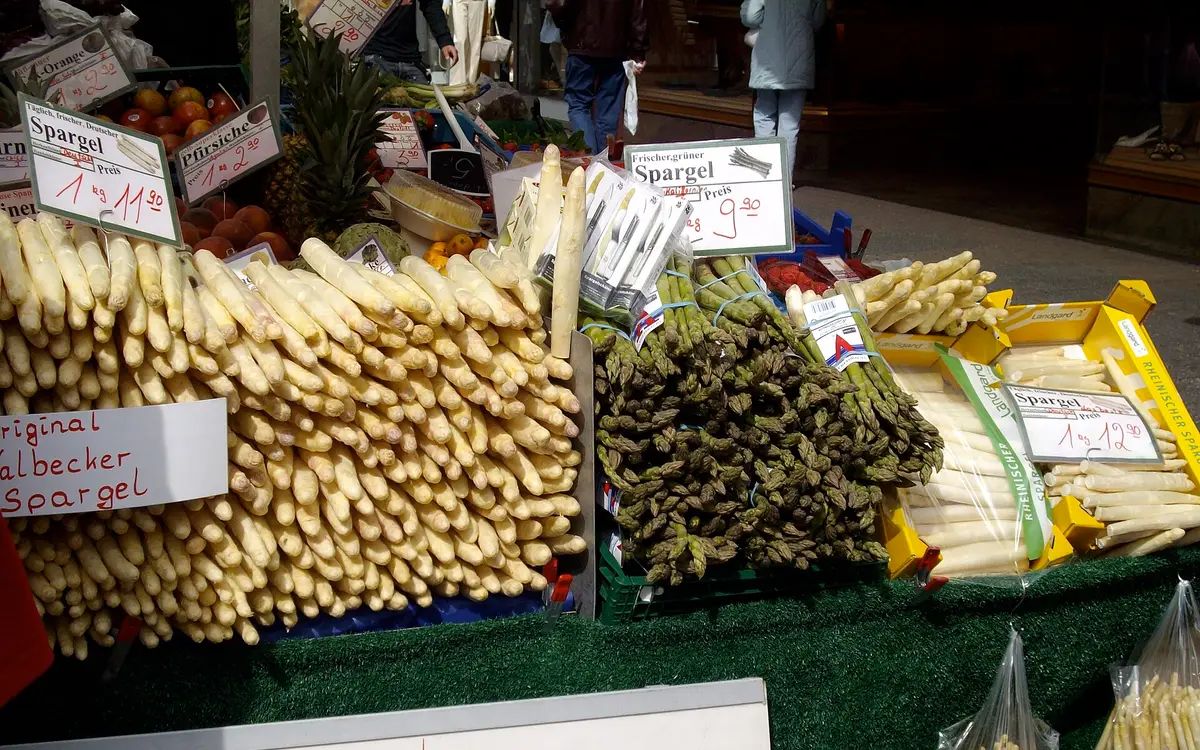
Spargelzeit (asparagus time) is Germany's white asparagus season. It runs from about mid-April, depending on the weather, and ends traditionally on 24 June, St John's Day. During those weeks fresh German white asparagus (Spargel) appears at roadside stands, markets and supermarkets, and restaurants add special asparagus menus.
If you moved here recently, you will notice the shift fast. Signs for "Frischer Spargel" go up on country roads, and colleagues start asking where you are having your first Spargel of the year. This guide explains what the fuss is about and how to join in without feeling lost.
Quick facts
- Season: from about mid-April (weather dependent) to 24 June, per the Federal Centre for Nutrition (BZfE). Most German asparagus is harvested from late April, according to BZL.
- Prices: they change by week, region and grade, so compare the price boards at two or three stands.
- Best-known regions: Schwetzingen (Baden), Beelitz (Brandenburg), Lower Saxony around Nienburg.
- How to buy: farm stands (Spargelstand), farm shops (Spargelhof), weekly markets, supermarkets.
- How to cook: peel from the head downwards, cut off the woody ends, simmer in salted water for 10 to 20 minutes.
- Classic plate: asparagus with Hollandaise sauce, boiled potatoes and ham or schnitzel.
When is asparagus season in Germany?
The BZfE puts the start at roughly mid-April and says the German season officially ends on Johannistag, 24 June. Heated fields can deliver some German asparagus in March, and imports from Spain and Greece reach shops from about mid-February, as BZL notes. Those early spears are not the German season, though, and many Germans wait for local ones.
A warm spring pulls everything forward, and a cold one pushes it back. Local news and farm websites announce the first harvest, and some towns open the season with a ceremonial first cut.
Why does Spargelzeit end on 24 June?
Johannistag, the feast of St John the Baptist, is the traditional cut-off. Growers stop cutting so the plants can rebuild their strength in the fields and produce a crop again next year. After this date the season does not return until the following spring.
It is a tradition rather than a law. In a hot year a few farms stop earlier, and you may see "Saisonende" signs in the first half of June. If you want asparagus, do not leave it to the last week.
Why is white asparagus such a big deal in Germany?
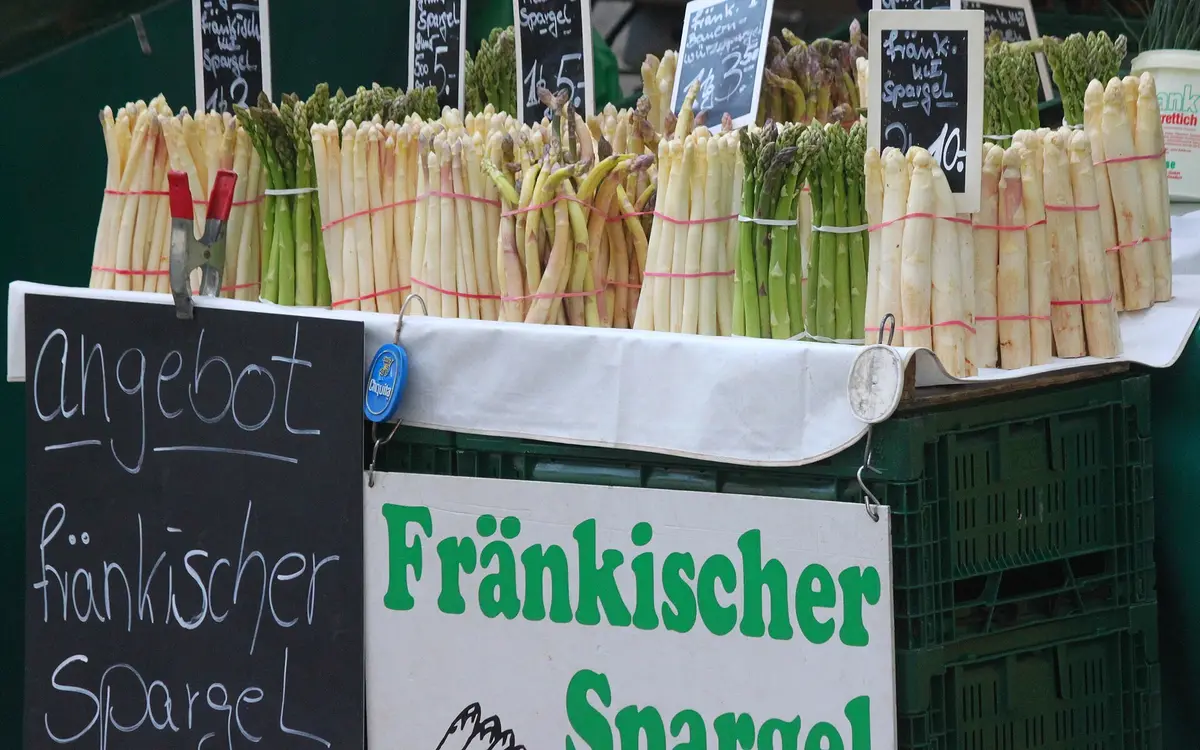
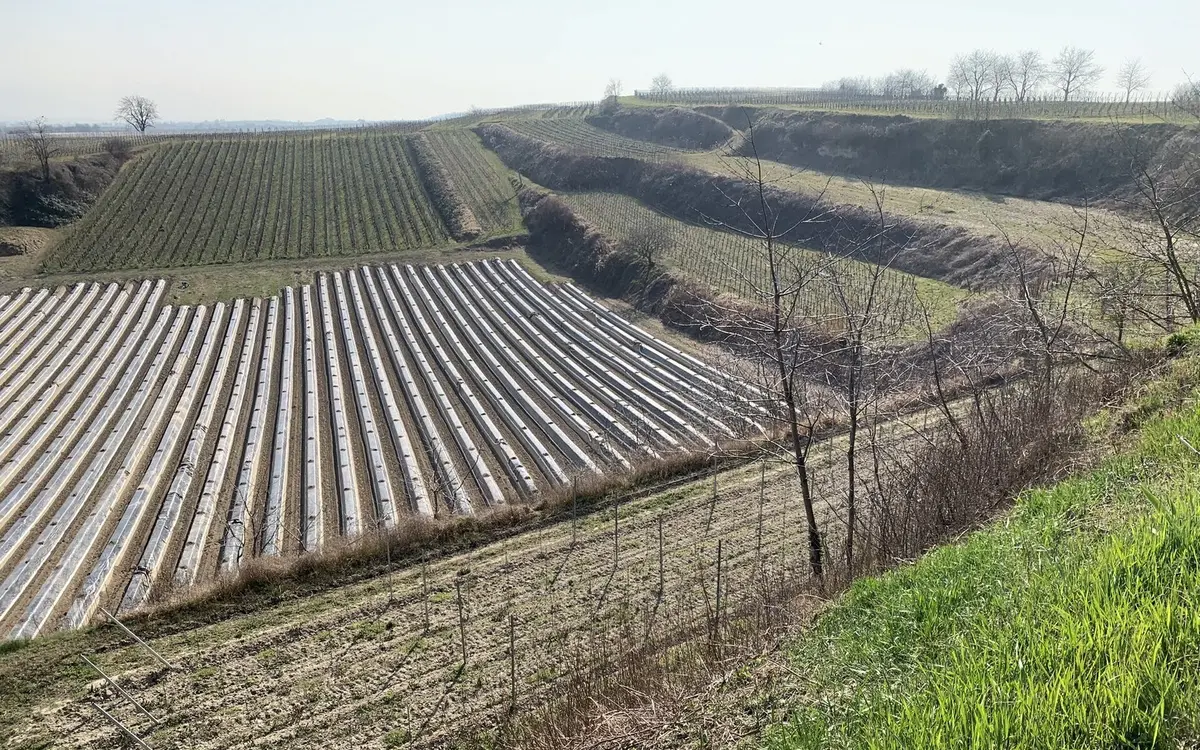
White asparagus grows under mounds of soil, so it never sees daylight and stays pale. The BZL says Germans prefer it to green asparagus, even though green dominates worldwide. It also has real farming weight: asparagus is the vegetable with the largest cultivated area in Germany, about 22,500 hectares in 2025, and the harvest was around 103,900 tonnes. Average fresh consumption was 1.2 kg per person that year.
Beyond the numbers, it is a short, once-a-year product, which is why it gets treated like an event. For more on how seasonal eating works here, see our guide to German food culture.
What are the classic Spargel dishes?
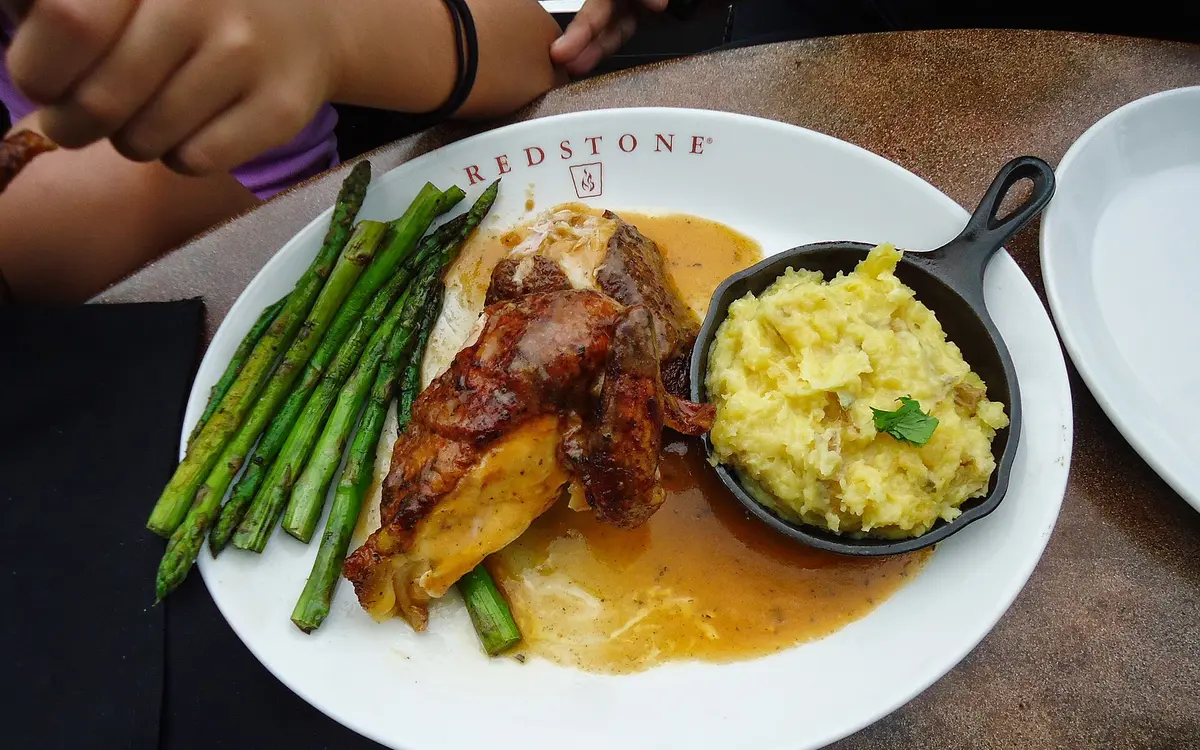
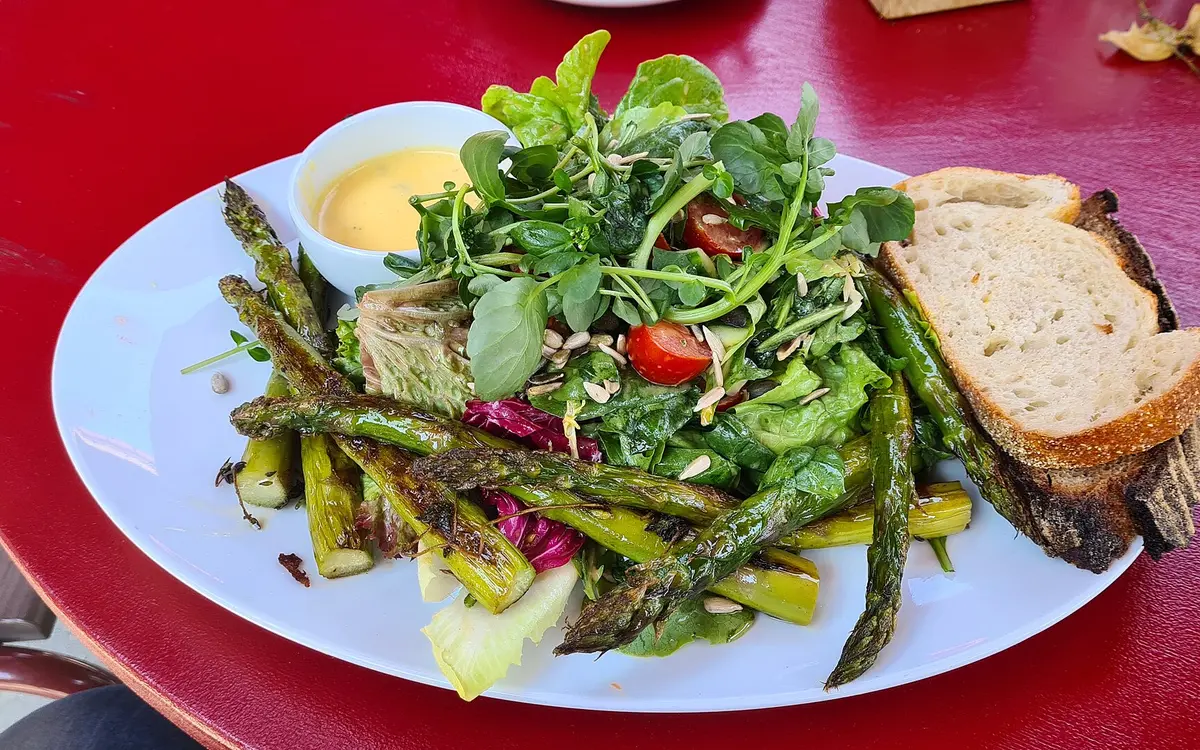
The traditional plate is simple: peeled spears boiled until tender, served with Hollandaise sauce (or melted butter), boiled new potatoes, and either cooked ham or a schnitzel. Plenty of restaurants offer variations, such as asparagus soup, asparagus with smoked salmon, or a plain portion with butter and potatoes for vegetarians.
At home, the BZfE also suggests frying asparagus in a pan, baking it au gratin, putting it in a vegetable tart or eating it as a salad. Plan on around 250 to 500 g of asparagus per person for a main course, depending on appetite (a rough rule of thumb, not an official figure).
Where should you buy fresh white asparagus?
You have four realistic options:
- Spargelstand: a temporary roadside stand or hut, often next to the field. Usually the freshest, and the staff will often tell you which field the spears came from.
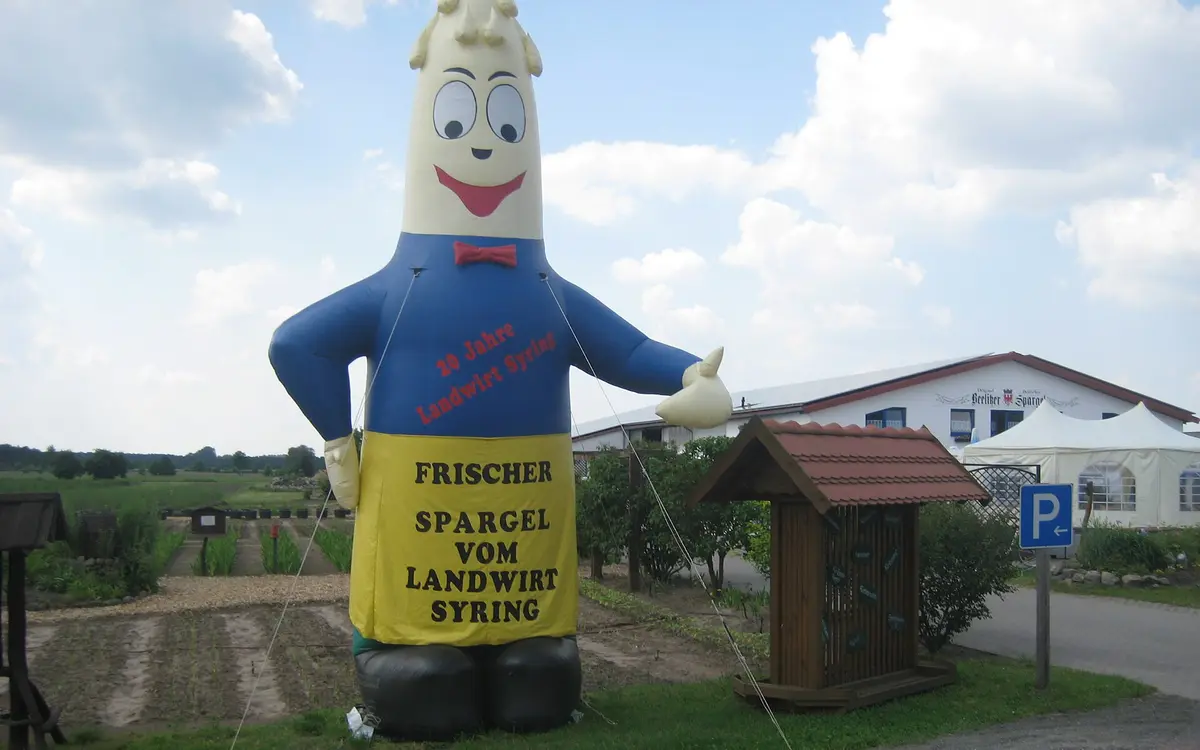
- Spargelhof or farm shop: a farm that sells directly, sometimes with a restaurant and a peeling service.
- Weekly market: good for comparing growers in one place.
- Supermarket: convenient, with some sold pre-peeled. Check the label for origin.
Most farm stands take cash, and some only accept it, so carry a few notes. If you do not own a car, regional trains to farm areas are covered by the Deutschlandticket in most cases, and our weekend trips by train article explains how that works.
What do the quality grades mean?
According to the BZfE, asparagus is graded Extra, Klasse I and Klasse II. Extra is the highest quality with no defects, Klasse I is good quality with small flaws in shape or colour, and Klasse II is saleable quality that meets the minimum requirements. Sorting also considers thickness and colour, and the spears are cut to a uniform length. While you are getting to know life in Germany, our overview of the German health insurance system is a good place to start.
Asparagus that fits none of the classes is sold directly by farms, usually for less, as "Suppenspargel" or "Bruchspargel" (soup or broken asparagus). It tastes the same, and it is a good deal for soup, risotto or a sauce. Note that, according to the Bavarian State Research Centre for Agriculture, size sorting is not required in food retail, so a stand may sort loosely or by thickness only. Ask what you are getting.
To judge freshness, look for a closed head, glossy skin and moist-looking cut ends. The BZfE adds that fresh spears squeak when rubbed together. Brown spots are harmless and come off with the peel.
How do you peel and cook white asparagus?
Unlike green asparagus, white asparagus needs peeling. The BZfE advises using a sharp peeler from the head downwards and cutting off the woody ends, roughly 1 to 3 cm. Cook it in salted water, with a pinch of sugar if you like, for 10 to 20 minutes depending on thickness and how firm you want it. For more local produce in Berlin, see our Markthalle Neun guide.
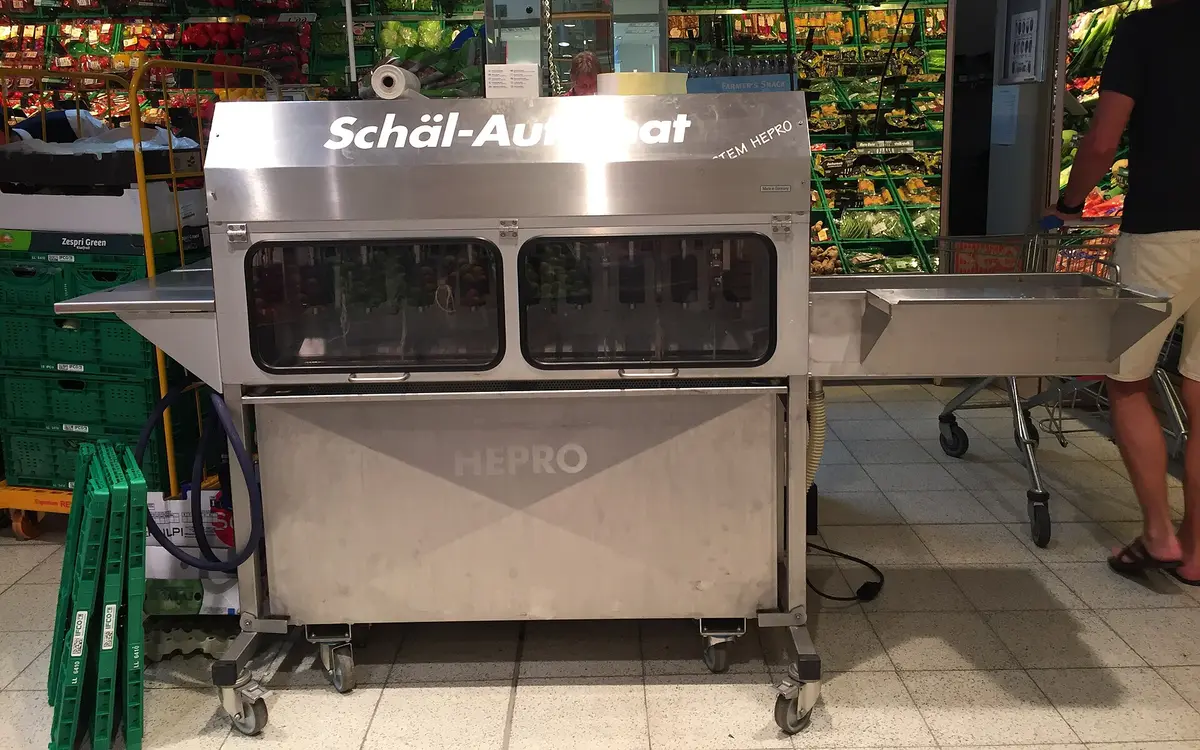
Storage is short: wrapped in a damp cloth in the fridge, white asparagus keeps about one to three days. Peeled spears should be used the same day. If you buy too much, peel and freeze it, and it keeps for 6 to 12 months and can be cooked straight from frozen.
How to enjoy Spargelzeit: a first-timer's plan
- Pick a date in May. Late April is early, and mid-June is often the end of the stands' best stock.
- Find a stand or farm shop near you. A quick map search for "Spargelhof" or "Spargelstand" works in any region.
- Buy about 500 g per person, plus new potatoes, ham and a ready-made or homemade Hollandaise.
- Peel it at home, or ask whether the farm peels for you.
- Simmer, taste, drain. It should bend slightly but not collapse.
- Eat it the German way: hot, with sauce, potatoes and a glass of dry white wine. Our Franconian wine guide is a good place to start for the wine.
- Try a restaurant plate once, so you know what a well-made one tastes like.
Which regions are famous for German asparagus?
Schwetzingen (Baden-Württemberg). The town calls itself the "Spargelstadt", and its tourism site says asparagus has been grown there since the middle of the 17th century. The main event is the Spargelsamstag, held on 9 May in 2026, with food stands, live music, and competitions such as asparagus peeling. Check visit-schwetzingen.de for the next date.
Beelitz (Brandenburg). This is the asparagus town closest to Berlin. The berlin.de listing of asparagus farms names several around Beelitz, including Josef Jakobs Spargelhof Schäpe, which grows asparagus on 250 hectares. The same page lists the Beelitzer Spargelfest for 4 to 6 June 2027, so confirm dates with the organiser before booking anything.
Lower Saxony and the Nienburg area. BZL data for 2025 show Niedersachsen as the largest asparagus state at 4,347 hectares, ahead of North Rhine-Westphalia (4,112), Brandenburg (4,026) and Bavaria (3,889). Nienburg sits in the heart of the sandy soils where much of it grows, and the Niedersächsische Spargelstraße links farms that sell directly.
Is Beelitz an easy trip from Berlin?
Yes. Beelitz is one of the closest trips on our list of day trips from Berlin, reachable by regional train under an hour. During the season you can combine a farm-shop visit with a walk, or a meal at a farm restaurant. Weekends in May and early June are busy, so go on a weekday if you can, and check the farm's own website for opening hours, as they change from year to year.
Are there asparagus festivals and farm visits?
Yes. Many asparagus towns hold a Spargelfest or Spargelsamstag, often with a regional asparagus queen (Spargelkönigin), peeling contests and food stalls. Some farms also offer field tours, open days or harvest experiences. Dates move each year, so rely on the town's tourism page rather than a printed list.
Budget matters too. Asparagus is not cheap, and restaurant plates tend to cost noticeably more than a plain main dish. Our cost of living guide helps you see where a seasonal treat fits into a monthly plan.
What is a Spargelmenü?
A Spargelmenü is a seasonal menu built around asparagus, usually offered in spring. Expect several courses: soup, the classic plate with Hollandaise, and sometimes a dessert with strawberries, another spring fruit. Many restaurants also keep a short asparagus card next to their regular menu. Because the menus are only available during the season, it is worth booking ahead at popular places on weekends.
FAQ
When does Spargelzeit start and end?
It starts around mid-April, depending on the weather, and traditionally ends on 24 June (Johannistag). Imported asparagus appears earlier, from about mid-February.
Why does asparagus season end on 24 June?
Growers stop cutting at St John's Day so the plants can recover and produce again the next year. It is a tradition rather than a legal deadline, and some farms stop earlier in warm years.
What is the difference between white and green asparagus?
White asparagus grows under soil and has no chlorophyll, so it must be peeled. Green asparagus grows above ground and usually needs only the woody ends cut off. Germans generally prefer the white kind.
How long do you cook white asparagus?
Peel it, cut off the woody ends and cook it in salted water for 10 to 20 minutes, depending on thickness and desired firmness, according to the BZfE.
Where can I buy fresh asparagus in Germany?
Buy it at roadside Spargelstände, farm shops (Spargelhöfe), weekly markets or supermarkets. Farm stands are usually the freshest, and unsorted "Suppenspargel" is often cheaper.