Berlin by Boat: Rent Without a Licence, Neu-Venedig
Berlin by boat: how to rent a boat without a licence, explore Neu-Venedig and the Müggelsee, ride the F10 ferry, and what to know about rules and prices.
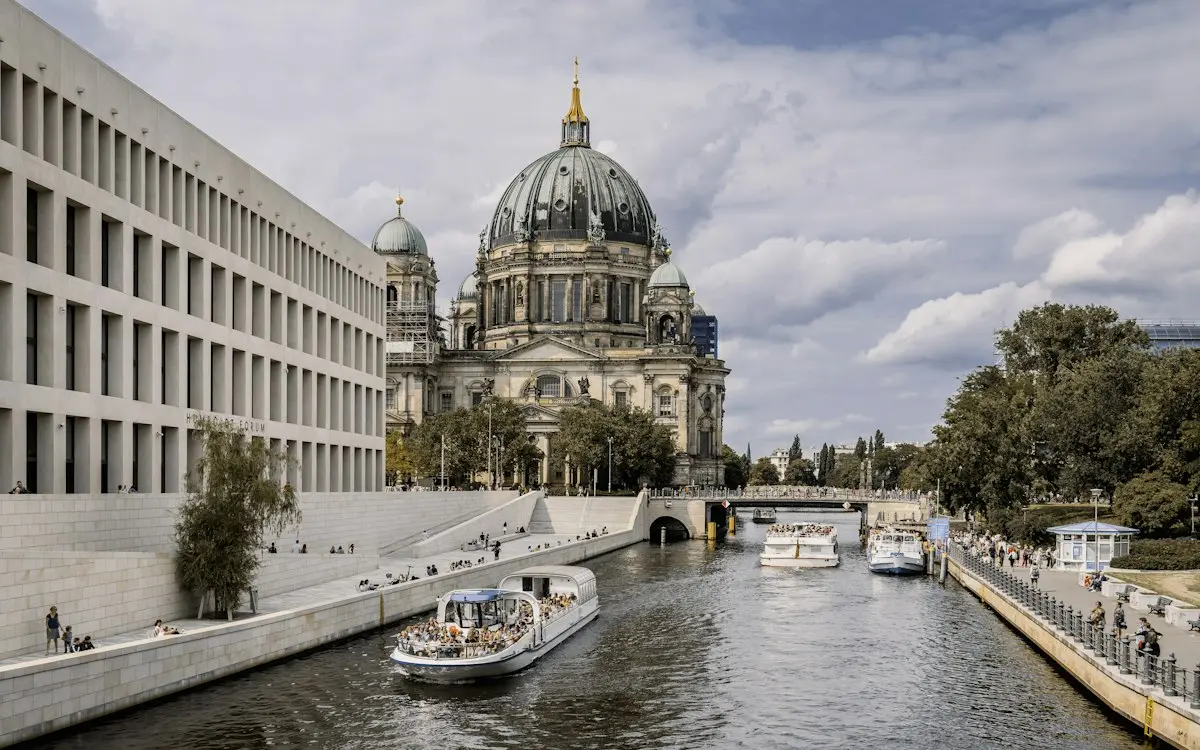
Berlin has more waterways than most visitors expect: the Spree, the Havel, the Landwehrkanal, and a ring of big lakes on the edge of the city. Once the weather warms up, the water is where a lot of Berliners spend their weekends. If you are looking for things to do in Berlin in summer that do not involve a queue, getting on a boat is one of the best options.
This guide covers how to rent a boat in Berlin without a licence, where to go, what the rules are, and how to use the city's public ferries.
Quick facts
- Licence: boats with engines up to 15 PS (11.03 kW) can be driven without a licence under the federal rules. Rental companies usually give a short briefing first.
- Best areas for beginners: Müggelsee and Neu-Venedig in the east, the Havel and Wannsee in the west.
- Public ferry: the BVG ferry F10 runs between Wannsee and Alt-Kladow and takes about 20 minutes. A normal AB ticket is valid.
- Typical prices: from around 49 to 240 euros for a raft or licence-free motorboat, depending on duration, day and operator. Details below.
- Alcohol: the general limit on the water is 0.5 per mille.
- Season: mainly late spring to early autumn. Book weekends well ahead.
Can you rent a boat in Berlin without a licence?
Yes. Under the federal rules, a motorboat with an engine of up to 11.03 kW (15 PS) does not need a Sportbootführerschein. Many rental companies in Berlin build their fleet around this rule, so you can book as a first-timer. Motorboats, rafts (Flöße) and some houseboats are offered this way.
A few practical points:
- The driver usually has to be at least 16 years old. There is no single Berlin-wide figure I could verify, and operators set their own minimum, so check when you book.
- Not every boat is licence-free. Larger houseboats and faster boats can need a licence or a charter certificate (Charterschein), which is issued after an instruction and valid only for the rental period. Ask the operator exactly what applies to the boat you want.
- Operators set the area you are allowed to travel in. One east Berlin rental company, for example, describes its licence-free boats as meant for the Dahme, the Müggelspree and the Müggelsee. Stick to the area you are given.
- The 15 PS limit is a political topic. In February 2026 the opposition Left Party (Die Linke) tabled a motion in the Berlin parliament asking the Senate to push, via the Bundesrat, for a federal limit of 5 PS. It is a proposal, not law, and I found no record that it has passed. Confirm the current rule with the operator when you book.
Rental companies are listed in directories such as Top10 Berlin. Read the operator's own page for the current licence rules and prices.
What is Neu-Venedig and how do you see it?
Neu-Venedig ("New Venice") is a small canal settlement in Rahnsdorf, in the Köpenick district in the southeast of Berlin. According to visitBerlin, the Müggelspree splits into canals here, with five canals and 13 bridges. The canals were dug from 1926 onward. It is a residential area with weekend houses, and almost every plot sits on the water.
There are no gondolas. The best way to see it is by canoe, a small rental boat or a boat tour. Because people live here, keep your speed low and your voice down, and do not moor on private jetties.
A common route starts at a rental place near the Müggelsee, crosses the lake and enters the canals. Another option is to start from a rental point closer to the canals, so you do not have to cross the big lake. If you do not want to steer, ask local tour operators whether a boat tour that passes Schloss Köpenick and Neu-Venedig runs in the season.
Where else can you go on the water?
Müggelsee
Berlin's largest lake is wide and open, with forest around much of the shore. It suits a relaxed day on a raft or motorboat.
Spree and Landwehrkanal
The inner-city Spree and the Landwehrkanal show you Berlin from a different angle: bridges, riverside bars, Kreuzberg's banks, Oberbaumbrücke. These central stretches are busier, with tour boats and commercial traffic. Boat-licence guides state that on the Spree between the Kanzleramtssteg and the Oberbaumbrücke you cannot drive a motorboat without a licence, whatever its engine power, and the Spree and Landwehrkanal are federal waterways with extra rules. I could not check the exact regulation text, so treat this as a strong warning rather than a full map. Most first-timers rent in the east or west and leave the centre to the tour boats. Ask your operator which stretches you may use.
Wannsee and the Havel
The west has the Havel lakes, Wannsee, Pichelssee and Spandau. It is calmer and greener than the centre, with beaches and woods along the shore. Several operators in Spandau rent rafts and licence-free motorboats on the Havel.
How do the BVG ferries work?
If you do not want to steer, Berlin's public ferries are the cheapest boat ride in the city. The best-known is line F10 between Wannsee and Alt-Kladow. According to berlin.de:
- The route is 4.4 km and takes about 20 minutes, passing Schwanenwerder island.
- It is operated by BVG. A one-way AB ticket is valid, and you can buy tickets on board.
- The short-distance ticket (Kurzstrecke) is not valid on this line, and round trips are not allowed. Everyone leaves at the end of the trip.
- It runs roughly hourly. On weekdays from 6:00 to 20:00, on Saturdays from 7:00 to 20:00 and on Sundays from 9:00 to 20:00, with an earlier end (19:00) in winter.
- There is space for 60 bicycles. Check the BVG for step-free access details.
Check the BVG app for the latest timetable before you go.
Are there floating bars and rafts?
Yes. Rafts (Flöße) are the Berlin version of a floating living room: a flat platform, often with a roof, a table, a grill and sometimes a sauna. They are slow, stable and licence-free, which makes them popular for groups. Several operators rent them in Berlin, for example around Köpenick and on the Havel in Spandau. Ask the operator for the exact area.
How much does it cost to rent a boat in Berlin?
Prices depend on the boat, the day and the length of the rental. These examples come from operator pages and were not re-checked against current price lists:
- A raft for around two hours at a lower rate from around 49 euros, and day charters from around 112 euros, at one operator that rents from a Köpenick base.
- A licence-free motorboat from around 169 euros for about 3.5 hours, and a raft for up to eight people from around 239 euros for a weekday of nine hours, at a Spandau operator.
- Deposits are common. Ask the operator for the amount, which varies by boat.
These figures can change, so check the operator's current price list. Weekends and school holidays usually cost more.
What are the rules on the water?
The basics are simple, but you are responsible even if you have never driven a boat.
- Alcohol: the general limit on German waterways is 0.5 per mille. The water police run checks on lakes and canals. Pick a sober driver, even on a slow raft.
- Speed: speed limits are low on Berlin waterways and are signed. Under the Binnenschifffahrtsstraßen-Ordnung the limit on many stretches of the Spree and Müggelspree is 10 km/h relative to the bank, and lower on the Landwehrkanal (around 6 km/h in the text I found). Larger lakes can allow more outside shore zones. I could not check the current wording, so follow the signs and your operator's briefing.
- Right of way: commercial vessels and tour boats are big, slow to stop and have priority in practice. Keep clear of them, stay to the right and keep away from locks until you are told how to use them.
- Life jackets: the rental company provides them. Wear one if you are not a confident swimmer and always for children.
What if you damage the boat?
This is where a lot of expats get caught. Our guide to private liability insurance (Haftpflicht) explains what a standard policy covers. Many policies exclude or limit damage to rented motorboats, so do not assume you are covered. Read your policy wording or ask your insurer before you rent.
Also check what the rental company covers. Ask about the deposit, the excess you pay in case of damage and whether the boat has its own insurance. Photograph the boat before you leave the dock.
What should you bring?
- Sun protection, a hat and plenty of water. There is little shade on the lakes.
- A waterproof bag or dry bag for phone and wallet.
- An ID or passport. Operators usually ask for it and for a deposit.
- Food and drinks, if the operator allows it. Many rafts have a grill, but ask about rules on bringing your own.
When is the best time to go?
Boating season in Berlin runs mainly from late spring to early autumn, with July and August the busiest months. Summer weekends tend to book up well in advance, so reserve early. Weekdays are usually cheaper and quieter. Some operators run rafts with saunas outside summer, so ask about winter availability. Spring is a lovely time on the water too, especially alongside our guide to cherry blossoms and beer gardens in Berlin.
If you are new to the city, our guide to moving to Berlin covers neighbourhoods and getting around, and the everyday life guides cover the other practical details of living here. For more to do in the city, see our Berlin museums guide, the best views in Berlin, and day trips from Berlin by train.
FAQ
Do I need a licence to rent a boat in Berlin?
Not for boats with an engine up to 15 PS (11.03 kW), which is the federal limit. Rafts and some motorboats are offered this way. Larger boats may need a licence or a charter certificate, and some central stretches of the Spree require a licence regardless of engine size, so check with the operator.
How much does a raft or boat rental cost?
Examples from operator pages range from around 49 euros for a short raft hire to around 240 euros for a full weekday. Deposits are common. Prices change, so check with the operator.
Is the BVG ferry included in my ticket?
The F10 ferry between Wannsee and Alt-Kladow accepts a normal AB ticket, and you can buy one on board. The short-distance ticket is not valid, and round trips are not allowed.
Can I drink alcohol on a rented boat?
The general limit for the person driving is 0.5 per mille, and the water police check. The limit applies to the person steering; the driver should stay sober. Rental companies may have their own rules, so ask.
Where is Neu-Venedig?
Neu-Venedig is a canal settlement in Rahnsdorf in Berlin's Köpenick district, between the Müggelsee and the Dämeritzsee. The Müggelspree splits into five canals there. You can reach it by canoe, small boat or boat tour.
Covered for health care while you explore? If you are still sorting out insurance, see our guide to health insurance in Germany.