Berlin Museums Guide: Museum Island, Passes, Free Entry
Your guide to Berlin museums: what's on Museum Island, the Pergamon closure, the Museum Pass, free museums and the Long Night of Museums.
Berlin has well over a hundred museums, and most newcomers see two or three of them in their first month and then stall. The choice is overwhelming, the prices are uneven, and some well-known buildings are closed for years. As a resident you have an advantage: you can spread the visits out, pick the cheap days and skip the queues.
This guide covers Berlin museums in the order most people ask about them: Museum Island, passes and free options, and then the big individual museums worth a trip. Prices and hours change, so treat the figures below as a snapshot from October 2026 and check the official site before you go.
Quick facts
- Museum Island: five museums on one island in the Spree. The Pergamonmuseum is closed for renovation and is due to reopen on 4 June 2027.
- Museum Island day ticket: 24 euros for one day, covering all exhibitions on the island.
- Museum Pass Berlin: 32 euros (16 euros reduced), valid for three consecutive days at about 30 museums.
- Free Museum Sunday: the monthly free Sunday ended after 1 December 2024. Do not plan around it.
- Always free: the permanent exhibition at the Topography of Terror and the core exhibition at the Jewish Museum.
- Under 18: free entry to the Staatliche Museen zu Berlin (state museums), with a free ticket and proof of ID.
- Long Night of Museums: once a year in late August. The 2027 date had not been confirmed at the time of writing, so check langenachtdermuseen.berlin.
Which museums are on Museum Island?
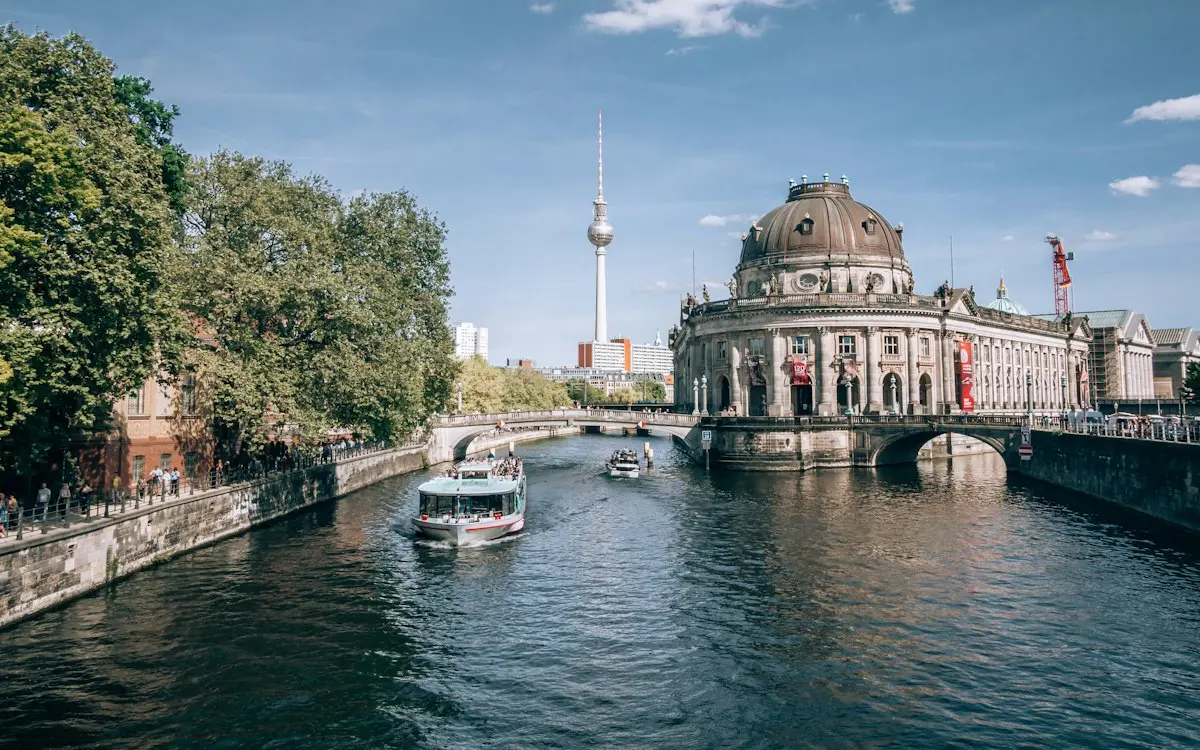
Museum Island (Museumsinsel) sits in the middle of the city, between the Spree and a canal, and is a UNESCO World Heritage Site. It is run by the Staatliche Museen zu Berlin, the state museum group. Five museums stand on it:
- Altes Museum: classical antiquities from Greece and Rome.
- Neues Museum: Egyptian and prehistoric collections.
- Alte Nationalgalerie: nineteenth-century painting and sculpture.
- Bode-Museum: sculpture, Byzantine art and coins.
- Pergamonmuseum: the famous architecture museum, currently closed (see below).
The island is compact, and you can walk between the buildings in minutes. Do not try to see all of it in one day. Two museums with a lunch break in between is a realistic plan. Because the island ticket is valid for one day only, a resident who lives nearby is often better off buying individual tickets or a pass, and coming back another week.
Is the Pergamonmuseum open?
No. The museum is closed for construction work, and the Staatliche Museen zu Berlin has set the reopening for 4 June 2027. Per the museum's announcement, the North Wing and the central building will open then. That includes the Pergamon Altar and the new presentation of the Museum für Islamische Kunst, which shows pieces such as the Aleppo Room, the Mschatta Facade and the Alhambra Dome.
The South Wing, which holds the main collection of the Vorderasiatisches Museum, stays closed after that date. An interim display in the Schlütersaal is planned, and a new presentation of that collection is planned from 2037.
If you want an idea of the altar before then, "Pergamonmuseum. Das Panorama" is a separate venue near Museum Island that shows Pergamon artefacts and a panorama by Yadegar Asisi. It is a different ticket, bookable through the state museums' ticket shop.
Is there a Museum Pass for Berlin?
Yes. The Museum Pass Berlin costs 32 euros, or 16 euros reduced, and is valid for three consecutive days. It covers more than 30 museums, including the Museum Island houses and other state museums. The Jewish Museum also lists it as a way to get free entry to temporary exhibitions.
Whether it pays off depends on your pace. Three days is short for most people with a job. The pass works well if you have visitors staying for a long weekend and want to cover several big names quickly. For your own exploring, a single ticket per visit is often cheaper, because you rarely do more than two museums a day.
Do not confuse the Museum Pass with the Berlin WelcomeCard, which is a tourist product that combines public transport with discounts. If you live here, you probably already have a monthly transport ticket, so the museum-only options make more sense.
Are there free museums in Berlin?
Berlin used to run a free Museum Sunday on the first Sunday of the month, with around 80 museums taking part. It ended after the final edition on 1 December 2024, when the Senate decided not to continue funding it. Attempts to keep a reduced version, such as one free Sunday every two months, did not go ahead. It has not returned as of October 2026, so do not count on it.
Some museums still do not charge for their main exhibition:
- Topography of Terror: the permanent exhibition is free, and it is open daily from 10:00 to 20:00 according to the city's listing. Free German-language tours run on Saturdays and Sundays at 14:00.
- Jewish Museum Berlin: the core exhibition in the Libeskind building is free. Temporary exhibitions in the Old Building cost 10 euros, or 4 euros reduced.
- Under 18: the state museums are free for visitors under 18. You collect a free ticket at the counter or book one online, and show ID at the entrance.
Some museums also run reduced days. The Berlinische Galerie, for example, charges everyone the reduced price of 7 euros on the first Wednesday of the month. One-off events happen too: on 25 October 2026 several museums in the southwest, including the Brücke-Museum, the Georg Kolbe Museum, the Haus am Waldsee and the Kunsthaus Dahlem, are announced to be free, planned as a one-time event funded by a private donation. Check each museum's own website for this kind of offer.
What is the DDR Museum like?
The DDR Museum on Karl-Liebknecht-Strasse, close to Museum Island, is built around touching things. You can open drawers in a reconstructed prefab flat, sit in a Trabant driving simulator and look through original objects from daily life in East Germany. It is a good first stop if you want to understand why East and West Berlin still feel different.
It is open every day from 9:00 to 21:00, and closes at 16:00 on 24 and 31 December. Adults pay 13.90 euros. Concessions cost 8.50 euros and apply to children from 6 years, pupils, students and a few other groups with proof. Children under 6 enter free. Tickets can be bought online or at the desk.
What should you know about the Jewish Museum?
The Jewish Museum Berlin, in Kreuzberg at Lindenstrasse 9 to 14, is known for its zig-zag building by Daniel Libeskind. The core exhibition covers Jewish history in Germany and is free. It is open Tuesday to Sunday from 10:00 to 18:00, with last admission at 17:00, and it is closed on Mondays. The museum lists closures on 14 November 2026 and 24 December 2026.
To get there, take the U1 or U6 to Hallesches Tor, or the U6 to Kochstrasse. Booking a time slot online reduces waiting, although walk-in tickets are available at the desk.
Is the Topography of Terror worth visiting?
Yes, and it costs nothing. The site stands where the Gestapo and SS headquarters once were, and the permanent exhibition documents the institutions of the SS and police in the Nazi state and the crimes they committed across Europe. It is a documentation centre, so expect a lot of text and photographs rather than objects. Allow around two hours.
The city's listing says it is closed on 24 and 31 December and 1 January. The official website is topographie.de, which is the place to check the latest hours.
Which museum suits a rainy day with kids?
Three suggestions that work well for families:
- Museum für Naturkunde (Natural History Museum): Invalidenstrasse 43. The museum currently lists two dinosaur exhibitions. It is open daily until 18:00 except Mondays. Adults pay 11 euros, and the reduced price is 5 euros for children from 6 years and concession holders. Family tickets cost 18 euros for two adults with up to three children under 14.
- Deutsches Technikmuseum: Trebbiner Strasse 9 in Kreuzberg, with a Science Center Spectrum for hands-on experiments. Check the museum's website for current prices and hours.
- DDR Museum: see above. Children from 6 years pay the concession rate.
Where do you go for contemporary and modern art?
Two good options, both easy to reach by public transport:
- Hamburger Bahnhof: the Nationalgalerie der Gegenwart, in a former railway station near the main station. Current hours are Tuesday, Wednesday and Friday 10:00 to 18:00, Thursday 10:00 to 20:00, and Saturday and Sunday 11:00 to 18:00. From 1 December 2026 the museum lists new hours of Tuesday to Sunday, 10:00 to 18:00. It is closed on Mondays.
- Berlinische Galerie: Alte Jakobstrasse 124 to 128 in Kreuzberg, a state museum for modern art, photography and architecture. It is open Wednesday to Monday from 10:00 to 18:00 and is closed on Tuesdays. Admission is 14 euros, or 7 euros reduced. Under-18s and refugees get in free.
Check the participating-museums list on the state museums' website to confirm that the Hamburger Bahnhof and the Berlinische Galerie are covered before you rely on the pass.
What is the Long Night of Museums?
The Lange Nacht der Museen is a yearly event where museums, memorials and special sites stay open into the night, with extra programmes, concerts and shuttle services. A single ticket covers all the participating venues.
The 2026 edition took place on 29 August with 75 venues, and the museums were open from 18:00 to 02:00. A ticket cost 23 euros, or 17 euros reduced, with an early-bird price of 15 euros (12 euros reduced) from 3 to 16 August. Children up to 12 years entered free. I could not find a confirmed date, times or prices for the 2027 edition, so check the official site (langenachtdermuseen.berlin) once they are published.
If you go, pick three or four venues in advance. The ticket includes the shuttle buses, but trying to cover everything ends in a lot of waiting.
How much does a museum habit cost over a year?
Museum entry adds up if you go often, but it is a small part of what you spend in the city. Our cost of living guide shows where the larger costs sit. A practical approach: use the free exhibitions at the Topography of Terror and the Jewish Museum as your baseline, buy a Museum Pass when you have guests, and save the paid exhibitions for one-off events.
If you are still settling in, our moving to Berlin guide covers neighbourhoods and getting around, and it helps to pair a museum visit with a good area. For another way to spend a weekend, see our post on Berlin by boat. In winter, our guide to Christmas markets in Germany is a good indoor-outdoor combination, since many markets sit near museums. The everyday life guides cover the rest of the practical details.
FAQ
Is the Pergamonmuseum open in 2026?
No. It is closed for renovation. The Staatliche Museen zu Berlin plans to reopen the North Wing and the central building, including the Pergamon Altar, on 4 June 2027. The South Wing stays closed.
Is there still a free museum Sunday in Berlin?
No. The monthly free Museumssonntag ended after 1 December 2024. Some museums still offer free permanent exhibitions, such as the Topography of Terror and the Jewish Museum, and the state museums are free for under-18s.
How much is the Berlin Museum Pass?
It costs 32 euros, or 16 euros reduced, and is valid for three consecutive days at about 30 museums. Check the state museums' website for the current list of participating houses.
Which Berlin museums are free?
The permanent exhibition at the Topography of Terror is free, and so is the core exhibition at the Jewish Museum. Under-18s enter the state museums free of charge. Other museums have reduced-price days, such as the first Wednesday of the month at the Berlinische Galerie.
When is the Long Night of Museums?
It takes place once a year in late August. The 2026 edition was on 29 August. Date and prices for 2027 were not confirmed when this guide was written, so check langenachtdermuseen.berlin.
New to the city and still sorting out your paperwork? Our guide to health insurance in Germany explains how to get covered.